
Listing your home in Washington State without a roof inspection is one of the costliest gambles you can make. A single missed issue can stall your closing, shrink your sale price, or expose you to legal liability under state disclosure law. The roof inspection home sale process here is uniquely challenging because of Washington’s heavy rainfall, moss-prone climate, and strict Form 17 disclosure requirements. This guide gives you a clear, step-by-step path through inspections, disclosures, repair decisions, and buyer negotiations so you can sell with confidence.
Table of Contents
- Key takeaways
- Roof inspection home sale requirements in Washington
- Preparing for a pre-sale roof evaluation
- Interpreting results and deciding your next steps
- Handling buyer concerns after inspection
- Final walkthrough and pre-close verification
- My honest take on pre-listing roof inspections
- Get your roof ready to sell with Atraxroofandgutter
- FAQ
Key takeaways
| Point | Details |
|---|---|
| Pre-listing inspections create disclosure duty | Once you order a roof inspection, any defects found must be reported on Washington’s Form 17. |
| Moss removal protects your negotiating position | Cleaning moss before listing prevents buyers from using it as leverage for larger repair credits. |
| Repair credits often close deals faster | Buyers frequently prefer credits over seller-managed repairs, reducing logistical friction for both sides. |
| Permit compliance matters at closing | Unpermitted roof work in Washington can delay or derail your closing entirely. |
| Certified reports increase buyer confidence | A professional roof condition report reduces buyer objections and supports a smoother transaction. |
Roof inspection home sale requirements in Washington
Washington State has specific legal obligations that every seller needs to understand before listing. The seller disclosure statement, known as Form 17, requires you to report known defects in writing, including roof condition issues. Under RCW 64.06 disclosure rules, sellers must disclose based on “actual knowledge.” This is where pre-listing inspections get complicated.
The moment you order a professional roof inspection, you gain actual knowledge of whatever the report reveals. You can no longer claim ignorance of those findings. Many sellers assume that skipping an inspection protects them legally. That logic usually backfires because buyers will order their own inspection anyway, and undisclosed defects discovered after closing can lead to disputes and legal claims against you.
Here is what to address on Form 17 related to roofing:
- Roof age and material type. Buyers need to know how old the roof is and what it is made of.
- Known leaks or water intrusion. Any history of leaks, even if repaired, must be disclosed.
- Moss or algae growth. Active or treated moss growth qualifies as a known condition.
- Repairs or replacements. Disclose any work done on the roof, including dates and whether permits were pulled.
- Permit status. Permit requirements vary across Washington jurisdictions. Some cities require permits for full replacements; others exempt like-for-like shingle swaps. Unpermitted work must be disclosed.
Pro Tip: Treat Form 17 as a roadmap to buyer concerns rather than a box-checking exercise. Honest, complete documentation reduces dispute risk far more than vague or incomplete answers.
A common seller mistake is marking “Don’t Know” on roof-related questions while simultaneously having had recent repairs done. Inconsistency between your disclosure and physical evidence discovered during inspection is a red flag that can kill a deal.
Preparing for a pre-sale roof evaluation
Choosing the right inspector and preparing your property properly can make the difference between a clean inspection report and a list of findings that spook buyers. Roof issues appear in nearly 20% of home inspections, making the roof one of the most scrutinized parts of any home sale. A general home inspector will note obvious problems, but a dedicated roof inspector will catch the nuanced issues that general inspectors miss.
Here is how to prepare and execute a strong pre-listing roof inspection:
- Hire a certified roof inspector. Look for someone with experience in Washington’s climate, including knowledge of moss growth patterns, composite shingle wear in high-rain conditions, and proper attic ventilation assessments.
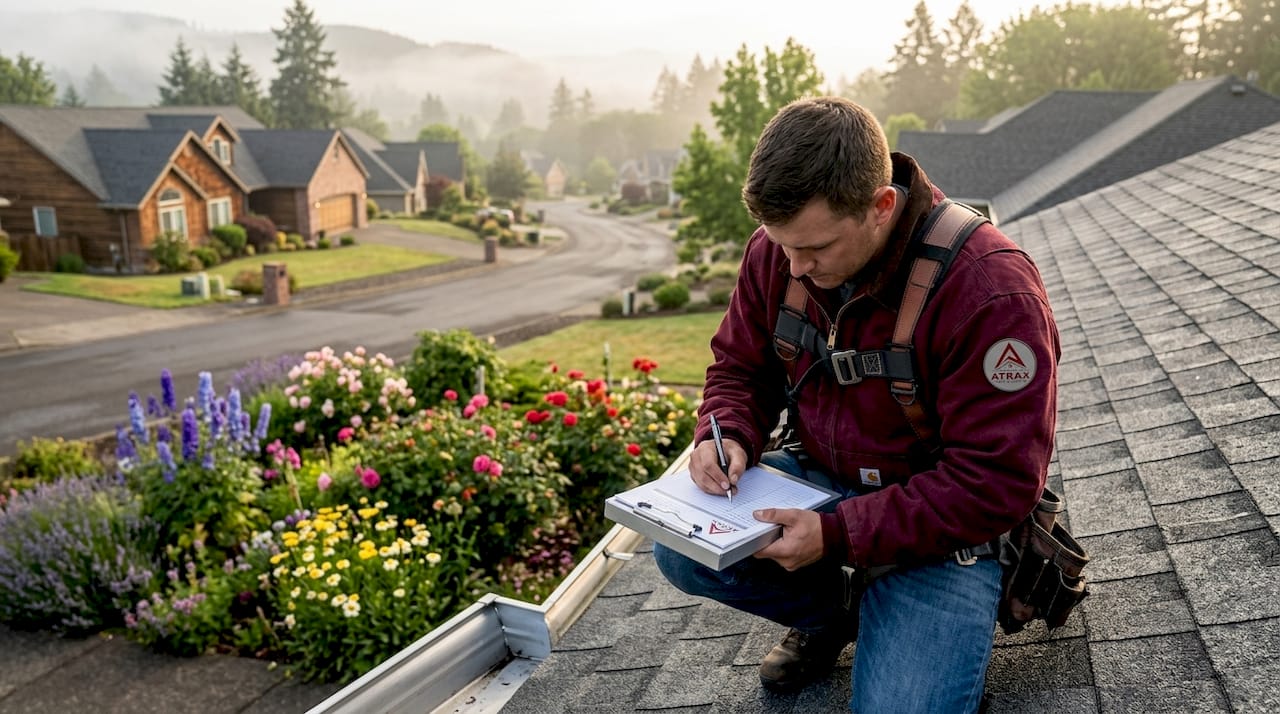
- Clean moss and debris before the inspection. Moss on north-facing roofs is one of the most common findings in Washington inspections. Removing it before the inspector arrives prevents it from appearing as a headline problem in the report.
- Clear attic access points. Inspectors check the underside of the roof deck for water staining, mold, and structural damage. Make sure your attic hatch is accessible and not blocked by storage.
- Check gutters and downspouts. Clogged gutters are frequently flagged and often signal inadequate drainage that can accelerate roof aging. Clean them out beforehand.
- Gather documentation. Collect records of any prior repairs, replacements, or permits. Inspectors and buyers both appreciate documented maintenance history.
- Note any visible interior water stains. Check ceilings and wall tops in upper-floor rooms. Proactively identifying and documenting a repaired leak is far better than letting a buyer discover unexplained staining.
Pro Tip: A dedicated roof inspection typically costs between $150 and $400 in Washington and gives you a professional condition report you can share with buyers proactively, which is a much stronger position than waiting for their inspector to find problems first.
Washington buyers, especially for homes over 15 years old, increasingly demand roof inspections due to the region’s climate impact. Getting ahead of that demand is smart preparation.
Interpreting results and deciding your next steps
Once your inspection report arrives, you face a decision that directly affects your sale price and timeline. Understanding what the findings mean, and how buyers will react, helps you choose the right path.
Common findings and their severity levels
| Finding | Severity | Typical Buyer Response |
|---|---|---|
| Active moss or algae growth | Low to medium | Requests cleaning or small credit |
| Cracked or missing shingles | Medium | Repair credit or seller repair required |
| Flashing failures at chimney/vents | Medium to high | Repair strongly expected before closing |
| Roof age near end of lifespan | High | Price reduction or full replacement credit |
| Active leak or interior water damage | Very high | Deal risk; significant credit or repair required |
In the Puget Sound region, a failing roof can reduce sale price significantly, with replacement costs typically ranging from $10,000 to $25,000. Buyers expect at least 5 to 10 years of remaining life. When a roof is nearing the end of its lifespan, buyers treat it as a near-term capital expense and negotiate accordingly.
Repair vs. credit: how to decide
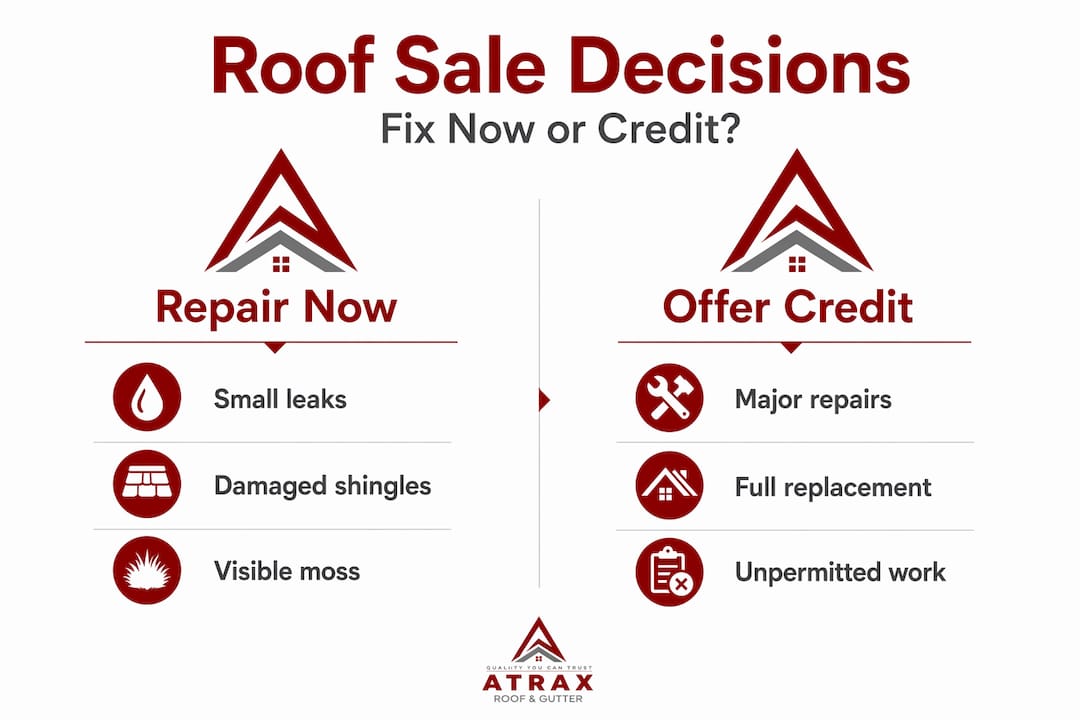
Sellers often assume making repairs before listing is always the better move. That is not always true. Buyers frequently prefer repair credits over seller-completed work because it gives them control over contractor selection and finish quality. The same logic applies to roofing.
Here is a practical framework:
- Do the repair yourself when the issue is minor, well-documented, and can be permitted and completed quickly. A repaired flashing with a permit and receipt is far less concerning to buyers than an unaddressed finding.
- Offer a credit when the repair is large, time-sensitive, or when buyer preference leans toward managing the work themselves. For roof replacements, a credit equal to contractor estimates is often the cleanest path.
- Disclose and price accordingly when neither option is feasible. Some sellers in time-pressured situations simply price the home to reflect the roof condition and disclose everything clearly. Transparency here is both legally required and strategically sound.
Collect two to three written contractor estimates for any significant repair. These protect you during negotiation and give buyers confidence that your credit offer is grounded in real numbers rather than guesswork. You can also review Washington replacement costs to benchmark your estimates against regional averages.
Handling buyer concerns after inspection
Washington home inspections typically occur within 10 days of contract signing, and the reports can run 30 to 60 pages. Roof findings almost always appear somewhere in that report. Knowing how to respond calmly and strategically keeps your deal moving.
Buyers usually respond to roof findings in one of three ways: they request repairs before closing, they request a credit at closing, or they ask for a price reduction. Here is how to handle each:
- Respond in writing and on time. Washington purchase agreements have firm deadlines for inspection responses. Missing those windows can give buyers grounds to exit the deal without consequence.
- Avoid verbally committing to repairs. All agreements about repairs or credits should go through your agent and into an addendum. Verbal promises create confusion and legal risk.
- Leverage your pre-listing inspection. If you already have a certified report, you are negotiating from a position of knowledge. You can counter uninformed buyer demands with documented facts.
- Know when to hold firm. Not every buyer request is reasonable. If your pre-listing inspection showed a roof with 8 years of life remaining and the buyer demands a full replacement credit, that is a negotiating tactic, not a legitimate concern.
Pro Tip: Certified roof inspection reports can increase buyer confidence and reduce objections significantly. Providing a copy of your pre-listing report as part of your disclosure package signals honesty and reduces the likelihood of aggressive inspection demands after contract.
Timing also matters. If you agree to repairs, use licensed contractors, pull the required permits, and get written documentation of completed work. Unpermitted repairs done quickly to satisfy a buyer can create new disclosure problems or title issues at closing.
Final walkthrough and pre-close verification
The final walkthrough typically happens 24 to 72 hours before closing. For sellers who have agreed to roof repairs or credits, this is the moment when buyers confirm the property matches what was agreed. Be prepared.
- Document all completed repairs with photos and receipts. Have these ready to share before the walkthrough. If a buyer’s agent asks about the roof work, your agent should be able to send documentation immediately.
- Confirm permit closure with the city or county. If a permit was pulled for roof work, verify that the final inspection was completed and the permit closed. An open permit at closing can delay funding.
- Walk the interior for any new water stains. After heavy rain, a freshly repaired roof may reveal previously hidden problems. Check ceiling surfaces in the days leading up to closing and address anything new immediately.
- Prepare a summary for your agent. A one-page summary of roof condition, completed repairs, and relevant documentation gives your agent a clear response ready when buyers ask questions during the final walkthrough.
Proactive communication in the final days of a transaction prevents the last-minute surprises that kill closings. Buyers who feel informed tend to close; buyers who feel uncertain tend to hesitate.
My honest take on pre-listing roof inspections
I have worked on roofs across Kirkland, Bellevue, Seattle, Bothell, and dozens of other communities throughout Washington for over 10 years. And I can tell you plainly: the sellers who struggle most during home sales are the ones who waited for the buyer’s inspector to find problems instead of knowing about them first.
In my experience, the most common misunderstanding I see is sellers believing that not ordering an inspection keeps them legally protected. It does not. Buyers will inspect regardless, and you will negotiate from a weaker position when findings catch you off guard. A pre-listing inspection gives you time, options, and leverage.
I have also seen municipal permit issues derail closings at the worst possible moment. A seller in the Eastside had unpermitted roof work done years before listing and only found out it was a problem when the title company flagged it three days before closing. That deal almost fell apart. The fix required emergency retroactive permitting and cost more in stress and fees than the original permit would have.
My honest advice: treat the pre-sale roof evaluation as an investment, not a cost. A clean report strengthens your listing. A report with resolved issues, documented properly, is nearly as strong. What buyers really want is honesty and evidence that the home has been cared for. A proactive roof inspection gives them both.
— Danyllo
Get your roof ready to sell with Atraxroofandgutter
If you are getting ready to list your Washington home, Atraxroofandgutter is here to help you put your best roof forward. We provide thorough roof inspections, honest reports, and expert repairs backed by our 20-year workmanship warranty. Our team knows Washington’s permit requirements, climate challenges, and buyer expectations inside and out.
Whether you need a pre-listing repair to address specific findings or a full assessment to start from a position of knowledge, we bring the same care and precision to every project. We also offer flexible financing options to help sellers invest in needed repairs without disrupting their cash flow before closing. View our completed projects to see the quality Washington homeowners trust. Contact us for a free, no-surprise quote.
FAQ
What does a roof inspection include for a home sale?
A roof inspection covers shingle condition, flashing, gutters, moss or algae growth, attic ventilation, and visible structural elements. The resulting report documents the roof’s age, remaining life estimate, and any defects requiring attention.
Do Washington sellers have to disclose roof problems?
Yes. Under Form 17 and RCW 64.06, sellers must disclose all known defects, including roof issues. Once you order an inspection, findings become “actual knowledge” that must be reported.
How much does a pre-listing roof inspection cost in Washington?
A dedicated roof inspection in Washington typically costs between $150 and $400, depending on roof size and complexity. That cost is minimal compared to the negotiating power it provides during a home sale.
Should I repair the roof or offer a credit to the buyer?
It depends on the issue. Minor repairs with permits and documentation are worth completing. For larger projects, buyers often prefer credits so they can manage contractor selection themselves. Get written estimates to support whatever path you choose.
Can unpermitted roof work affect my home sale in Washington?
Yes. Unpermitted roof replacements can cause closing delays and may require costly retroactive permitting. Always disclose any unpermitted work on Form 17 and address it before listing when possible.


