

If you’ve been living with the same gutters since you bought your home, you’re likely overdue for a closer look. A gutter system upgrade is more than swapping out damaged troughs. It’s a deliberate improvement to the materials, sizing, design, and functionality of your entire water management setup. For Washington state homeowners dealing with heavy seasonal rainfall, clogged gutters aren’t just annoying. They’re a direct threat to your foundation, siding, and landscaping. This guide breaks down exactly what upgrades involve, what they cost, and which installation choices make the most sense for your home.
Table of Contents
- Key takeaways
- What a gutter system upgrade actually involves
- The real benefits of upgraded gutters for Washington homeowners
- Gutter installation options: what to know about gutter upgrades
- Understanding the cost of a gutter system upgrade
- Post-upgrade maintenance: keeping your system performing
- My honest take on gutter upgrades after 10+ years in the field
- Ready to upgrade your gutters? Atraxroofandgutter can help
- FAQ
Key takeaways
| Point | Details |
|---|---|
| Upgrades go beyond repairs | A gutter system upgrade improves materials, sizing, and function, not just patching what’s broken. |
| Size matters in Washington | Larger 6-inch gutters handle heavy Pacific Northwest rainfall better than standard 5-inch versions. |
| Neglect is expensive | Failing to upgrade can result in $5,000 to $20,000 in structural damage to your home. |
| Guards reduce maintenance | Gutter guards cut cleaning frequency but still require periodic inspection to work properly. |
| Professional installation pays off | Correct slope and downspout placement are critical to preventing pooling, rot, and foundation erosion. |
What a gutter system upgrade actually involves
Most homeowners confuse an upgrade with a repair. A repair addresses one broken hanger, one leaking seam, or one sagging section. A gutter system upgrade is a broader investment. It replaces or improves the entire system with better materials, better sizing, and better drainage technology.
Here’s what a full gutter system improvement typically includes:
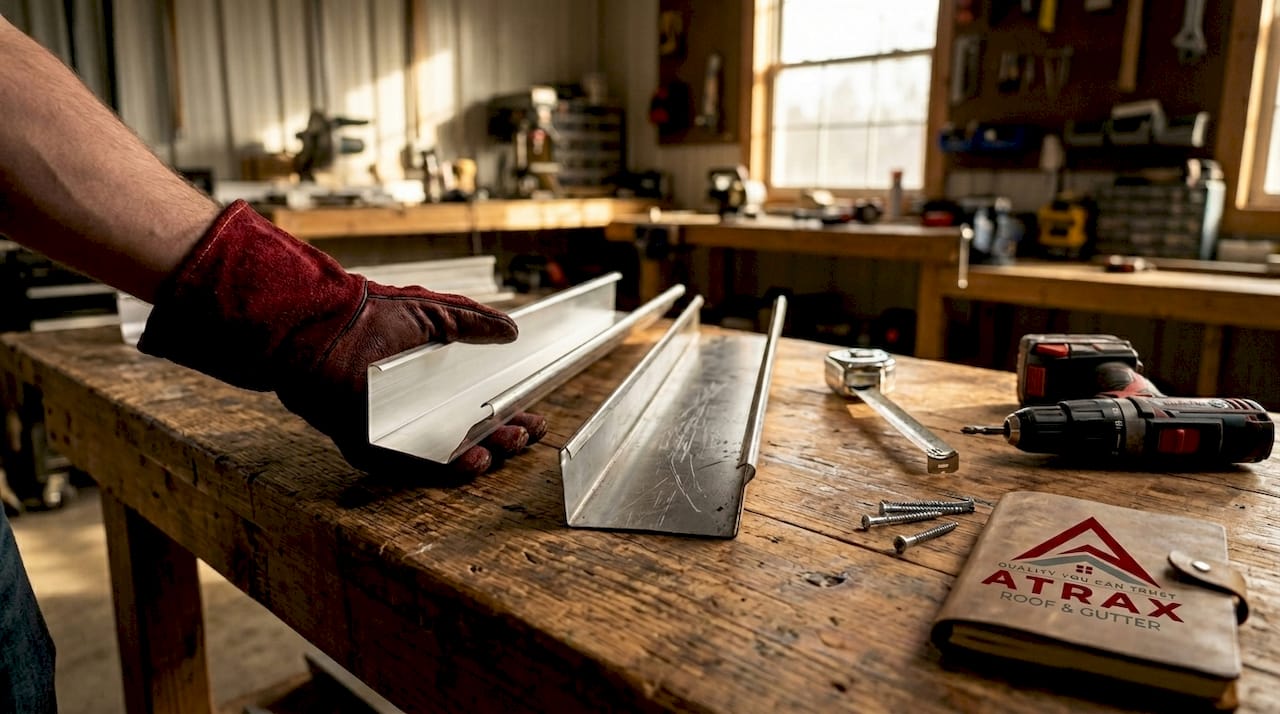
- Seamless gutters: Formed on-site from a single continuous piece of metal, seamless gutters cost $5 to $15 per linear foot and eliminate the joint leaks common in sectional systems.
- Larger sizing: 6-inch gutters suit heavy rain regions like the Pacific Northwest far better than standard 5-inch versions, which only handle moderate rainfall effectively.
- Gutter guards: Covers or filters installed over the trough to reduce debris entry and lower cleaning frequency.
- Downspout upgrades: Larger downspouts, added locations, and extended drainage away from the home’s foundation.
- Material upgrades: Moving from worn vinyl to aluminum, steel, or copper for improved durability and longevity.
Compare this to what a basic repair or cleaning covers:
| Service | What it includes | What it doesn’t address |
|---|---|---|
| Gutter cleaning | Removes debris and flushes downspouts | Damaged materials, poor slope, undersized gutters |
| Spot repair | Fixes one leak or rehung section | Failing material throughout the system |
| Full upgrade | New materials, sizing, guards, and downspouts | Nothing. This is the full solution. |
On material choices: aluminum is the most popular for its balance of cost and durability. Steel holds up to heavy impact but can rust over time without proper coating. Copper is the premium choice. It’s visually striking, expands nearly an inch over 100 feet during temperature swings, and requires specialized expansion joints with EPDM gaskets to prevent leaks. It also lasts 50 years or more with minimal maintenance.
The real benefits of upgraded gutters for Washington homeowners
Washington’s climate makes this more than a home improvement project. The state’s wet seasons generate the kind of sustained, heavy rainfall that overwhelms outdated or undersized gutter systems. When water spills over or pools near the foundation, the damage compounds fast.
Here are the core benefits of a proper gutter system improvement:
- Foundation protection. Overflow water saturates the soil around your home, causing settling, cracking, and water intrusion in basements or crawl spaces.
- Siding and fascia preservation. When gutters overflow or leak at seams, water soaks behind the siding and into the fascia boards, accelerating rot.
- Landscaping protection. Concentrated overflow erodes planting beds and creates drainage channels in your yard.
- Lower maintenance burden. Gutter guards reduce debris accumulation, reducing how often you need to climb a ladder for a full clean-out.
- Longer system lifespan. Functional gutter systems last 20 to 50 years. Upgrading to quality materials now delays your next replacement by decades.
- Curb appeal and property value. A well-installed, clean gutter line improves your home’s exterior appearance and signals to buyers that the home has been maintained. Explore how specific upgrades boost value when you’re planning which features to prioritize.
Pro Tip: If your home is near evergreen trees, you’re dealing with more than leaves. Pine needles and seed pods pack into gutters tightly and resist flushing. Homes near conifers need more frequent attention and benefit most from micromesh gutter guards, which block fine debris better than basic covers.
Neglecting upgrades doesn’t just leave your gutters underperforming. It builds up risk. Structural repairs caused by failing gutters can run from $5,000 to $20,000, far more than the cost of a timely upgrade.
Gutter installation options: what to know about gutter upgrades
When it comes to how to upgrade gutters, you have meaningful choices in every category. Understanding your options protects you from making a rushed decision with a contractor.
DIY vs. professional installation
DIY is possible for basic sectional gutter replacement on a single-story home. But it carries real risks. Working at height on a ladder with tools is one of the leading causes of homeowner injuries. More importantly, proper drainage requires correct slope and flow direction. Getting it wrong by even a fraction of an inch over a long run causes pooling, which defeats the entire purpose of the upgrade.
Seamless gutters, which are the preferred choice for most Washington homes, require professional equipment. They’re formed on-site using a specialized machine and cannot be installed without it.
Key installation decisions to make
- Seamless vs. sectional: Seamless options reduce leak points dramatically. Sectional gutters, connected in sections with joints, cost less upfront but require more maintenance over time.
- Gutter guard type: Mesh screens block most debris but need cleaning. Reverse-curve guards work on surface tension and suit heavy rainfall. Micromesh guards offer the best fine-particle filtration and are worth the extra cost near deciduous or conifer trees. Read a detailed breakdown of guard types for Washington homes to match your specific tree cover.
- Downspout sizing and placement: One 2×3 inch downspout handles about 600 square feet of roof. A typical Washington home needs multiple, strategically placed downspouts to prevent overflow at corners and valleys.
- Extensions and splash blocks: These direct outflow away from the foundation. A common oversight is installing a perfectly sized gutter system but dumping the water only 12 inches from the house.
Most professional upgrades are completed in one day for an average-sized home, though larger or more complex rooflines may take two days.
Understanding the cost of a gutter system upgrade
Cost transparency matters. Here’s a realistic breakdown of what to expect for a Washington state home:
| Component | Typical cost range |
|---|---|
| Full seamless aluminum gutter installation | $1,000 to $2,500 |
| Copper gutter system | $4,000 to $8,000+ |
| Gutter guard installation | Several hundred to $1,000+ depending on system and home size |
| Full home installation range | $1,000 to $5,000 |
| Structural repairs from gutter failure | $5,000 to $20,000 |
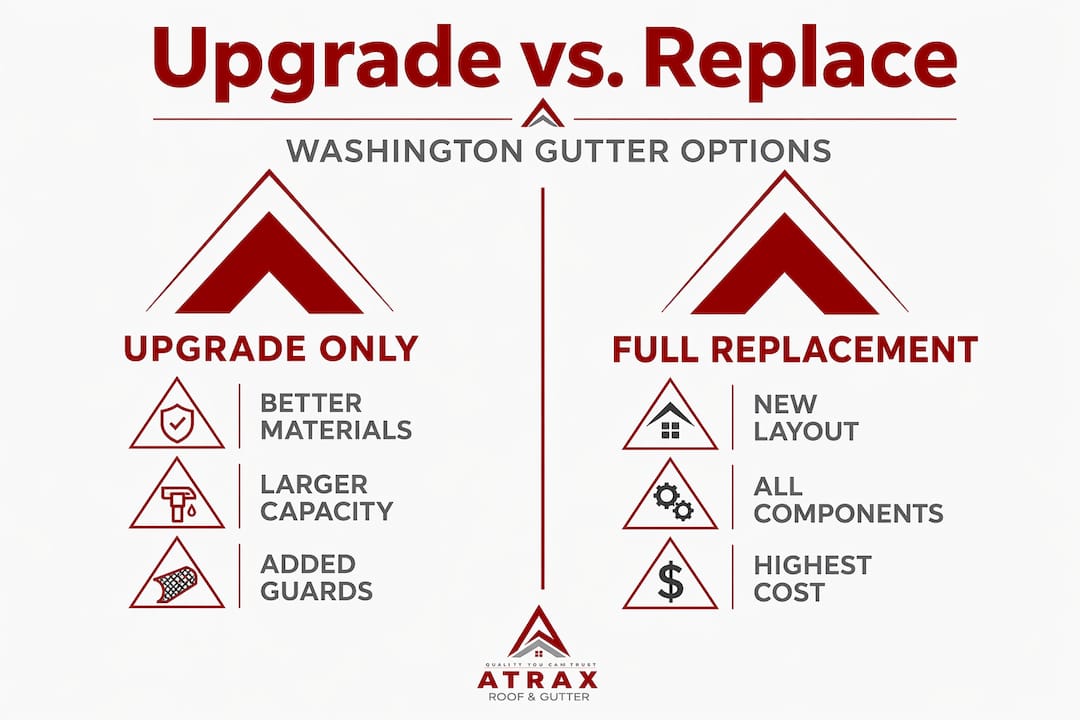
The gutter replacement vs. upgrade question often comes down to how much of the existing system is still functional. If your gutters are warped, pulling away from the fascia, or made of vinyl that’s become brittle, a full replacement is the smarter path. Patching a failing system costs money twice.
Material choice drives cost significantly. Aluminum is the best value for most homeowners. Steel costs more but adds impact resistance. Copper delivers the longest lifespan and the most visual appeal, but the upfront cost reflects that. Gutter guard cost varies widely by brand and coverage, so get multiple quotes and compare coverage area.
Pro Tip: When comparing quotes, ask each contractor to specify the gutter profile (K-style vs. half-round), the material gauge, and the guard system they’re recommending. A lower quote that uses thinner-gauge aluminum or a low-quality guard system isn’t a deal. It’s a shorter lifespan.
Financing makes upgrades accessible for most budgets without delaying a protection decision that affects the whole home.
Post-upgrade maintenance: keeping your system performing
A well-installed gutter system still needs attention. This is especially true in Washington, where rainfall is heavy and tree coverage is dense.
Here’s what to stay on top of after any gutter system improvement:
- Schedule cleanings at least twice per year. Fall and late spring are the priority seasons. Homes with heavy tree coverage may need more frequent cleaning to stay ahead of buildup.
- Inspect slope and alignment annually. Hangers loosen over time. A section that drops even slightly holds water and can pull the gutter away from the fascia under load.
- Check for leaks at end caps and corners. Even seamless gutters can develop issues at the joints that do exist, primarily at outlets and corners.
- Look for debris in downspouts. Guards stop most debris at the surface, but some fine material still makes it through and can pack at the downspout opening.
- Watch for staining on siding. Watermarks or green algae lines on your siding below the gutter line signal overflow, which usually means a partial clog or a slope issue.
Use a thorough gutter inspection checklist each season to catch small issues before they become structural ones. When you see loose hangers, rust streaking, or separation at the roofline, call a professional before the next big rainfall.
My honest take on gutter upgrades after 10+ years in the field
I’ve seen a lot of Washington homeowners reach out after the damage has already happened. A flooded crawl space. Fascia so rotted it’s pulling the entire gutter run away from the roofline. A foundation that’s started to settle because water has been pooling at the base for years. None of that is dramatic or unusual. It’s just what happens when gutters are ignored long enough.
The misconception I hear most often is that upgrading gutters is mostly about looks. It isn’t. The biggest value is functional, and it’s invisible until something goes wrong. The homes that hold their value, stay dry, and avoid five-figure repair bills are the ones where someone made a deliberate decision about water management before the damage showed up.
I’ve also seen homeowners choose the cheapest possible upgrade and regret it within three years. Thin-gauge aluminum, low-quality guards, and poor downspout placement are the most common shortcuts. They cost less today and more over time.
If I were advising a friend buying a home in Kirkland, Bothell, or Redmond, I’d tell them this: spend the money once on a properly sized, professionally installed, seamless system with quality guards. Then schedule your twice-yearly inspections and stop worrying about it. That’s what protecting your home actually looks like.
— Danyllo
Ready to upgrade your gutters? Atraxroofandgutter can help
If you’ve been considering a gutter system upgrade and want to know exactly what it would take for your home, Atraxroofandgutter is ready to walk you through it.

With over 10 years serving Washington homeowners across Kirkland, Bellevue, Seattle, Bothell, and Redmond, we’ve handled everything from straightforward aluminum replacements to custom copper installations on complex rooflines. Every project comes with honest, no-surprise quotes and our 20-year workmanship warranty. Browse our completed upgrade projects to see the quality firsthand. If budget is a consideration, explore our flexible financing options designed to make protection affordable. Or go straight to our gutter replacement service page to get started with a free estimate. Your home deserves a system that actually works.
FAQ
What is a gutter system upgrade?
A gutter system upgrade is a deliberate improvement to your home’s water drainage setup, involving better materials, larger sizing, seamless construction, gutter guards, and properly placed downspouts. It goes well beyond cleaning or spot repairs.
How do I know if I need an upgrade or just a repair?
If your gutters are pulling away from the fascia, leaking at multiple points, visibly warped, or made from aging vinyl, an upgrade is the better investment. A single damaged section typically warrants a repair; widespread failure warrants replacement.
How much does a gutter upgrade cost in Washington state?
A full seamless aluminum gutter installation typically runs $1,000 to $2,500 for an average home. Copper systems can cost $4,000 to $8,000 or more. Skipping the upgrade risks structural repairs that can reach $5,000 to $20,000.
Do gutter guards eliminate the need for cleaning?
No. Gutter guards reduce debris buildup and lower how often you need full clean-outs, but they don’t eliminate maintenance entirely. Annual inspections and occasional clearing are still necessary, especially near conifers.
What size gutters do Washington homes need?
Most Washington homes benefit from 6-inch K-style gutters rather than the standard 5-inch size, because heavy Pacific Northwest rainfall can overwhelm a smaller system and cause overflow even when gutters are clean.


