

Gutters are one of the most consistently overlooked items in any real estate transaction. Buyers scrutinize kitchens, bathrooms, and roof age while a failing gutter system quietly redirects water into the foundation, behind fascia boards, and through interior walls. A thorough gutter inspection real estate buyers request before closing can expose damage that is neither visible on the surface nor mentioned in a standard home inspection report. This guide covers what inspections actually check, what red flags cost the most to fix, and how to use gutter findings to protect your investment.
Table of Contents
- Key takeaways
- Gutter inspection in real estate: what standard reports actually cover
- Common gutter problems found during real estate inspections
- How to interpret and expand your gutter evaluation
- Maintenance history and its role in buyer due diligence
- My take on what buyers consistently get wrong
- Protecting your investment with Atraxroofandgutter
- FAQ
Key takeaways
| Point | Details |
|---|---|
| Standard inspections have limits | Visual home inspections miss concealed fascia rot and improper gutter pitch without specialist tools. |
| Gutter defects are negotiation leverage | Inaccessible or damaged gutters can support price reductions or seller-funded repairs before closing. |
| Maintenance history reveals neglect | Ask sellers for cleaning records; absent records signal deferred maintenance and possible hidden water damage. |
| Specialist evaluations are worth the cost | A focused gutter fascia inspection with moisture meters and infrared cameras catches what standard inspections skip. |
| Cleaning frequency varies by location | Heavily treed properties require quarterly cleaning; without it, clog-related overflow damage compounds fast. |
Gutter inspection in real estate: what standard reports actually cover
Most buyers assume a general home inspection covers gutters thoroughly. The reality is much narrower. Standard home inspections include a visual assessment of gutters and downspouts for visible condition and drainage direction. Inspectors confirm whether water stains are present, whether downspouts discharge away from the foundation, and whether obvious sagging or separation is visible from the ground.
That is a useful starting point, but it leaves significant gaps. Inspection standards limit evaluations to readily accessible, visible components at the time of inspection. Anything concealed behind a soffit, tucked under a roofline, or obscured by vegetation does not get reported. Fascia rot hidden behind a gutter channel, for example, will not appear in a standard report even when the damage is severe.
Here is what a roof and gutter inspection during a standard home inspection typically includes:
- Visible gutter condition along accessible rooflines
- Downspout presence, connection, and discharge direction
- Obvious signs of separation, sagging, or pulling from the fascia
- Water staining on siding or below gutters
- General debris observation where gutters are visible from ground level
What it typically does not include:
- Gutter pitch measurement or verification of proper slope toward downspouts
- Attachment point inspection behind or beneath gutter channels
- Moisture readings behind fascia boards or soffits
- Confirmation that all downspout extensions discharge at a safe distance from the foundation
Pro Tip: When you receive an inspection report, look for comments that explain the condition, its significance, and a recommended next step. Observation alone is inadequate; if a comment just says “gutters present,” push your inspector for specifics on drainage and attachment.
Understanding these limits matters before you make an offer. The gap between what a standard inspection covers and what is actually happening behind those gutters is where real estate buyers get caught off guard.
Common gutter problems found during real estate inspections
When buyers and investors know what to look for, gutter red flags become readable before closing. The most frequently found issues during real estate inspection services include clogging, sagging, separation from fascia, and misdirected downspouts. Each one can create cascading damage if left unaddressed.
Here are the most financially consequential gutter problems by severity:
- Clogged gutters causing overflow. Debris buildup forces water over the gutter edge, soaking the fascia board repeatedly. Fascia rot develops silently and can spread into the roof deck structure before it is ever detected.
- Sagging or pulling gutters. When gutters separate from their attachment points, water pools in the low spots rather than flowing toward downspouts. This puts mechanical stress on the remaining fasteners and accelerates full detachment.
- Improper downspout discharge. All three parts of the system must be clear and aimed correctly. Downspouts discharging at the foundation wall or into poorly graded soil are one of the leading causes of basement water intrusion and foundation settlement.
- Plant growth inside gutters. Visible moss, weeds, or small plants growing from a gutter signal years of clogging and soil accumulation. This level of neglect almost always means fascia damage exists beneath the channel.
- Rust staining or discoloration on siding. Streaks running vertically below a gutter line indicate overflow has been occurring for months or longer. The staining itself is cosmetic, but the water path behind it is not.
Undetected gutter failures redirect water into fascia boards, foundations, and interior walls, leading to repairs that far exceed what any gutter replacement would have cost. A full fascia repair on a two-story home can run $1,500 to $4,000 depending on material and access. Foundation waterproofing starts higher. Neither cost is optional once the damage sets in.
For buyers making investment decisions, these are not cosmetic concerns. They are structural and financial liabilities that belong in your negotiation conversation.

How to interpret and expand your gutter evaluation
Knowing how to inspect gutters during the buying process does not require you to climb a ladder. It requires asking the right questions and knowing when to bring in a specialist. Here is a practical framework for what to verify before you close.
What to check from ground level
Walk the full perimeter of the property and look for:
- Gutter channels that visibly slope away from the downspout rather than toward it
- Separation gaps between gutter and fascia, even small ones
- Staining on siding below any gutter run
- Downspout extensions that end within two feet of the foundation wall
- Any gutter section that appears lower at the center than at either end
This walkthrough takes five minutes and regularly reveals problems an inspector missed because the inspection happened from inside the home or in poor lighting.
When to request a specialist evaluation
Visual inspection alone cannot confirm that gutters are pitched correctly or fully attached. Pitch measurement and attachment verification require tools beyond standard visual assessment. If any of the following conditions exist, request a dedicated gutter fascia inspection before closing:
- The property has significant tree coverage and no documentation of regular cleaning
- Water staining is visible on siding, fascia, or in basement areas
- The home is more than 15 years old with original gutters
- The standard inspection report notes any gutter concerns without quantifying them
- The inspector marked any gutter-adjacent area as inaccessible
A focused gutter fascia inspection includes moisture detection tools and infrared cameras to confirm gutter attachment and drainage, and to detect rot that is completely invisible on the surface.
Pro Tip: Use the Washington homeowners inspection checklist to cross-reference what your inspector reported against what a proper gutter evaluation should cover. Any gap between the two is worth addressing before closing.
| Inspection type | Tools used | What it confirms |
|---|---|---|
| Standard home inspection | Visual only | Visible condition, drainage direction, obvious defects |
| Gutter fascia inspection | Moisture meter, infrared camera | Fascia rot, attachment integrity, hidden moisture |
| Condition report | Pitch gauge, attachment check | Pitch accuracy, seam quality, fastener condition |
Maintenance history and its role in buyer due diligence
Real estate gutter maintenance history is one of the most underused tools in a buyer’s due diligence process. Sellers who have maintained their gutters properly can produce cleaning logs or contractor invoices. Sellers who cannot are telling you something without saying a word.
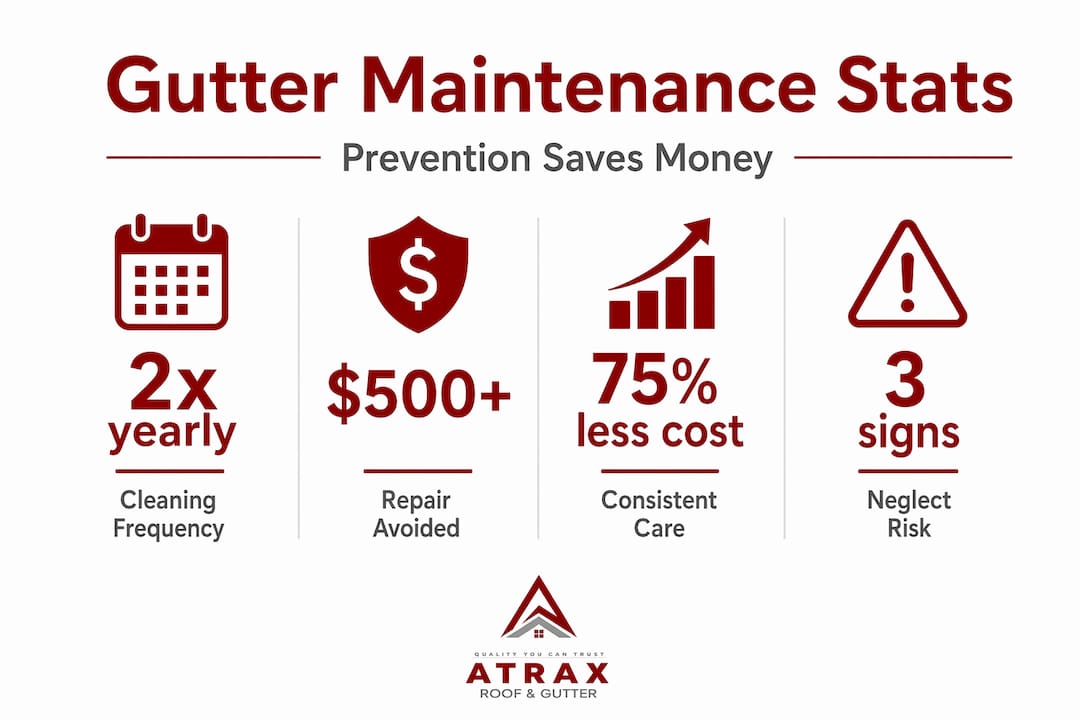
Clean gutters at least twice per year, and quarterly when heavy tree coverage is present. Properties with mature trees surrounding the home that show no maintenance documentation are a red flag. In the Pacific Northwest, where Atraxroofandgutter serves communities like Kirkland, Bothell, and Bellevue, fir and maple trees drop debris year-round. A twice-yearly cleaning schedule is a reasonable minimum; quarterly is the standard for properties with significant canopy.
Here is how maintenance history affects your decision as a buyer:
- Clean records with no gutter defects mean you can factor normal preventative costs into your ownership budget and move forward with confidence.
- No records and visible neglect mean you should request a specialist inspection and price any needed repairs into your offer.
- Records showing recent repairs without follow-up maintenance suggest a reactive rather than preventative approach, which often means deferred problems exist elsewhere in the drainage system.
You can also look at the gutters themselves as physical evidence of maintenance frequency. Gutters, downspouts, and discharge extensions that are all clear and properly positioned signal an owner who treats the drainage system as the protective infrastructure it actually is. Those that are packed with debris, stained, or partially detached tell the opposite story. Check the cleaning frequency guide for Washington homes to understand what a reasonable maintenance schedule looks like for properties in this region.
The connection between consistent maintenance and lower long-term repair costs is direct. Regular cleaning prevents the clog-to-overflow-to-fascia-rot cycle entirely. That cycle is responsible for a large share of the expensive repairs buyers inherit when they skip the gutter evaluation.
My take on what buyers consistently get wrong
I have been on roofs and inspecting gutter systems for over 10 years. What I see consistently is that buyers treat a standard inspection report as a final answer on gutter condition. It is not. It is a starting point.
The most costly mistakes I see are not from buyers who ignored obvious damage. They are from buyers who read a report that said “gutters functional, minor debris present” and assumed everything was fine. Minor debris at inspection time does not tell you what that gutter system has been doing to the fascia for the past five years.
I have pulled gutters on properties where the surface looked acceptable, and found fascia boards that were soft all the way through. That damage does not appear in a visual report. Inaccessible conditions are legitimate negotiation points in a transaction, and buyers who understand that can ask sellers to fund a specialist evaluation before closing or adjust the price accordingly.
My advice: talk to your inspector in person, not just through the report. Ask specifically what they could not access, what they did not verify, and whether they recommend any follow-up on gutters. A good inspector will tell you exactly where the limits of their evaluation were. Use those limits strategically. They protect you financially if you know how to apply them.
— Danyllo
Protecting your investment with Atraxroofandgutter

If a gutter inspection has raised questions about a property you are considering, Atraxroofandgutter can give you honest answers backed by real expertise. We serve home buyers and investors across Kirkland, Bothell, Redmond, Bellevue, Seattle, and the surrounding communities with thorough gutter and roof repair evaluations built around your protection, not a quick sell.
Whether you need a focused gutter inspection before closing, a repair assessment after an offer is accepted, or a full gutter replacement on a property with extensive damage, our team brings 10+ years of experience, licensed and insured credentials, and our 20-year workmanship warranty to every job. We also offer financing options so unexpected repair costs do not derail your purchase timeline. Explore our completed projects to see the standard of work we bring to every property. Contact us for a no-surprise quote today.
FAQ
What does a standard gutter inspection cover in real estate?
A standard home inspection covers visible gutter condition, downspout presence and discharge direction, and obvious signs of sagging or separation. It does not include pitch measurement, attachment verification, or moisture testing behind fascia boards.
How do gutter problems affect home value?
Failing gutters can cause fascia rot, foundation water intrusion, and interior wall damage, all of which reduce property value and require costly repairs. These defects are negotiation leverage and should be priced into any offer.
When should a home buyer request a specialist gutter inspection?
Request a specialist evaluation when the standard report notes any gutter concerns, when visible staining or neglect is present, or when any gutter-adjacent areas were marked inaccessible during the general inspection.
How often should gutters be cleaned on a property I am buying?
Gutters should be cleaned at least twice yearly, and quarterly for properties with heavy tree coverage. Absence of maintenance records from a seller is a red flag worth investigating before closing.
Can gutter issues be used in price negotiations?
Yes. Inaccessible or concealed gutter conditions are commonly used as negotiation leverage to request seller-funded repairs or price reductions before a transaction closes.


