

A leaky ceiling tile here, a few missing shingles there — it’s tempting to assume a quick patch job will hold everything together for another season. But that kind of thinking can quietly cost Washington homeowners thousands of dollars in hidden structural damage, mold remediation, and energy loss. Roof replacement is not just a last resort. It is often the smartest, most cost-effective decision you can make for your home’s long-term safety and value. This guide explains exactly what roof replacement involves, how to recognize the right time for it, and what Washington-specific rules apply to your project.
Table of Contents
- What is roof replacement? Understanding the basics
- When should you replace your roof? Signs and decision points
- Roof replacement in Washington: Permits, codes, and key rules
- The roof replacement process: Steps, expectations, and tips for homeowners
- A roofing expert’s perspective: Why smart planning beats quick fixes
- Plan your roof replacement with trusted Washington experts
- Frequently asked questions
Key Takeaways
| Point | Details |
|---|---|
| Replacement vs. repair | Full roof replacement addresses widespread damage that repairs cannot, saving costs long term. |
| Permit requirements | Most full roof replacements in Washington require city or county permits—always check your jurisdiction. |
| Code triggers | Replacements can mandate insulation, ice barriers, or flashing details per state energy code. |
| Project steps matter | Planning ahead and choosing experienced contractors ensures a code-compliant, durable new roof. |
| Expert advice | Consult local professionals to avoid pitfalls and maximize the value of your new roof investment. |
What is roof replacement? Understanding the basics
Roof replacement means completely removing your existing roofing system down to the deck and installing an entirely new one in its place. This is different from a repair, which addresses one specific problem area, or a “re-cover,” which adds a new layer of shingles over an existing one. A true replacement starts fresh, allowing your contractor to inspect the decking underneath, address any hidden rot or moisture damage, and build a system designed to last 25 to 50 years depending on materials.
Understanding the difference between repair and replacement is one of the most important decisions a homeowner faces. Here is a clear comparison:
| Factor | Roof Repair | Roof Replacement |
|---|---|---|
| Scope | Targets specific damaged areas | Full removal and reinstallation |
| Durability | Short-term fix | Long-term solution |
| Cost | Lower upfront | Higher upfront, lower long-term |
| Best for | Minor leaks, isolated shingle damage | Widespread damage, aging systems |
| Structural inspection | Limited | Full deck inspection included |
| Code compliance | Usually not triggered | Often triggers code upgrades |
The most common triggers homeowners encounter include persistent leaks, missing or broken shingles, and signs of widespread deterioration that signal the existing system can no longer reliably protect the home. When damage is isolated to a small section and the rest of the roof is in sound condition, roof repair services may be the right call. But when problems are spread across multiple areas or the roof is simply aged out, the roof replacement process becomes the more reliable path forward.
Here is what a typical replacement involves from start to finish:
- Complete tear-off of existing shingles, underlayment, and flashing
- Full deck inspection to identify rot, soft spots, or structural concerns
- Deck repairs as needed before any new materials are installed
- New underlayment for a moisture barrier layer
- Installation of new shingles or roofing material using premium products
- New flashing, drip edges, and ventilation components
- Thorough cleanup including magnet sweeps for nails and debris removal
When should you replace your roof? Signs and decision points
Knowing when to replace rather than repair saves money and prevents structural problems from compounding over time. Washington’s wet climate accelerates roof wear more than many homeowners realize. Heavy rainfall, moss growth, and freezing temperatures in higher elevations all shorten a roof’s effective lifespan.
Here are the top six signs your roof may need full replacement rather than a patch:
- Active leaks in multiple locations. A single leak might be a damaged shingle or failed flashing. Multiple leaks in different areas indicate systemic failure across the roofing system.
- Missing or curling shingles. Shingles that curl at the edges or tabs that have blown away entirely are a strong sign that the material has exceeded its lifespan and is no longer bonding properly.
- Heavy granule loss. Asphalt shingles shed granules as they age. Finding large amounts in your gutters or at downspout outlets means the protective layer is gone, leaving the shingle core exposed to UV and moisture.
- Visible sagging. Any dip or sag in the roof’s surface suggests the decking or structural supports beneath are compromised. This is a safety issue, not just a cosmetic one.
- Repeated repairs in recent years. If you have called a roofer three or more times in the past five years for different problem areas, you are spending repair money on a system that needs replacement. The math almost never favors continued patching.
- Age beyond expected lifespan. Standard three-tab asphalt shingles typically last 20 to 25 years. Architectural shingles can reach 30 years. Cedar shake, common in older Washington homes, lasts 20 to 30 years but is highly susceptible to moss and rot in the Pacific Northwest’s moisture.
Widespread damage or deterioration such as leaks, missing materials, and evidence the system can no longer protect the home are the clearest signals that replacement is the right move. Use our repair vs replacement guide to evaluate your specific situation before committing to either path.
Pro Tip: Do not wait for water to show up on your ceiling. By the time a leak reaches living spaces, moisture has likely been sitting in your attic insulation and decking for weeks or months. Schedule an inspection at the first sign of missing shingles or granule loss, and you could avoid thousands of dollars in secondary damage.
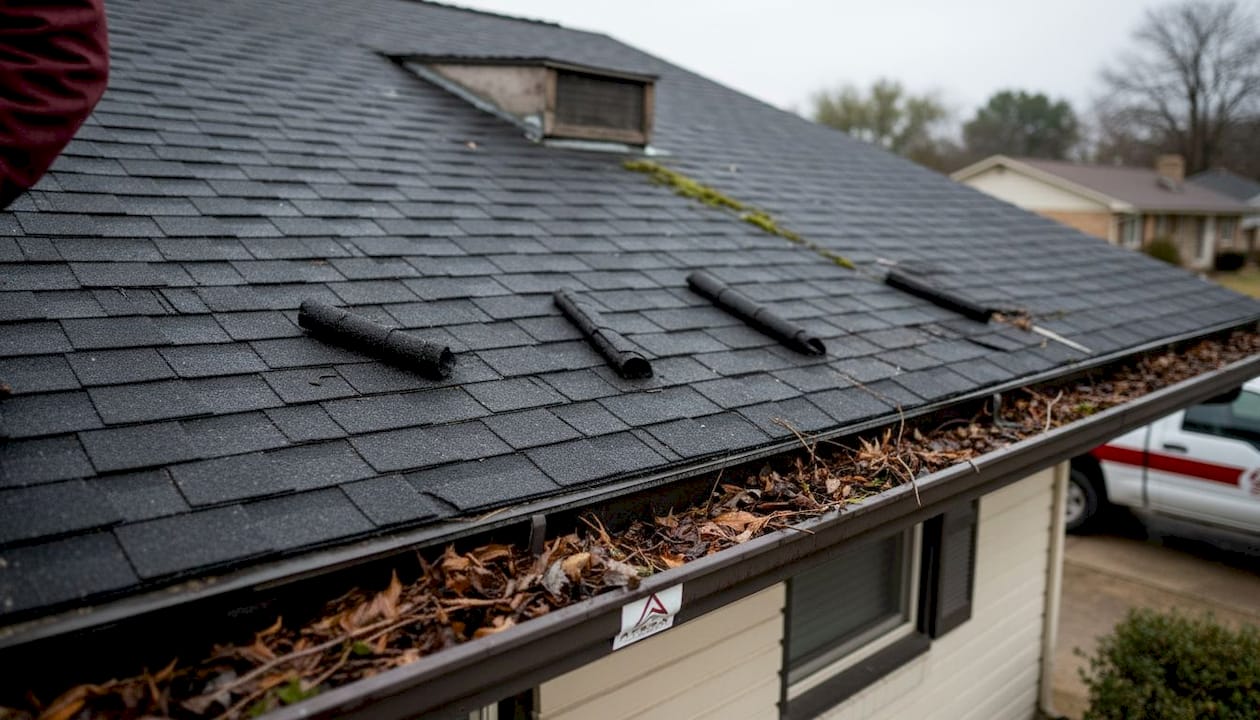
A useful benchmark: if your repair cost estimate is more than 50 percent of the cost of a new roof, replacement almost always delivers better value over the next 10 to 15 years. Reference our roof replacement checklist to see how your current roof stacks up before making a decision.
Roof replacement in Washington: Permits, codes, and key rules
This is where many Washington homeowners get caught off guard. Replacing a roof is not simply a construction project. In most jurisdictions across the state, it is a regulated activity that requires permits, inspections, and sometimes code-triggered upgrades that go beyond just swapping shingles.
Re-roofing permit requirements vary by local jurisdiction, but many Washington cities and counties treat full roof replacement as permit-worthy work, including both tear-offs and re-covers. Here is a summary of how key jurisdictions approach it:
| Jurisdiction | Permit required? | Inspection required? | Key notes |
|---|---|---|---|
| Seattle | Yes | Yes | Energy code compliance mandatory |
| Bellevue | Yes | Yes | Deck upgrades may be required |
| Kirkland | Yes | Yes | Drip edge and ice barrier required |
| Bothell | Yes | Yes | Re-cover limit: one layer over existing |
| Redmond | Yes | Yes | Permit scope expands with added work |
| Spokane Valley | Depends on scope | Yes if permitted | Energy code applies on full replacement |
When permits are pulled, Washington’s energy code often kicks in and requires specific upgrades that go beyond the shingles themselves. Energy-code upgrades such as new insulation, ice barriers, drip edges, and flashing details may all become required depending on your area and the scope of the work.
Here are the most common mistakes homeowners make when it comes to permits and codes:
- Assuming the contractor automatically pulls permits without confirming it in writing
- Choosing a contractor who offers to skip permits to save money upfront
- Not knowing that adding a skylight or changing decking automatically expands the permit scope
- Failing to schedule a final inspection after the work is complete
- Not budgeting for code-required upgrades like ice and water shield in freeze-prone areas
Expert note: If your replacement project involves any work beyond a standard tear-off and re-shingle, such as replacing decking sections, adding a skylight, or upgrading ventilation, the permit scope almost always expands. That means more inspections and potential code upgrades. Plan for it upfront rather than discovering it midway through the job.
Check out our post-replacement maintenance tips to understand what to do after your new roof passes inspection and the crew leaves.
The roof replacement process: Steps, expectations, and tips for homeowners
Knowing what to expect during a replacement helps you stay informed, protect your property, and avoid being caught off guard when the crew shows up with a dumpster and a nail gun.
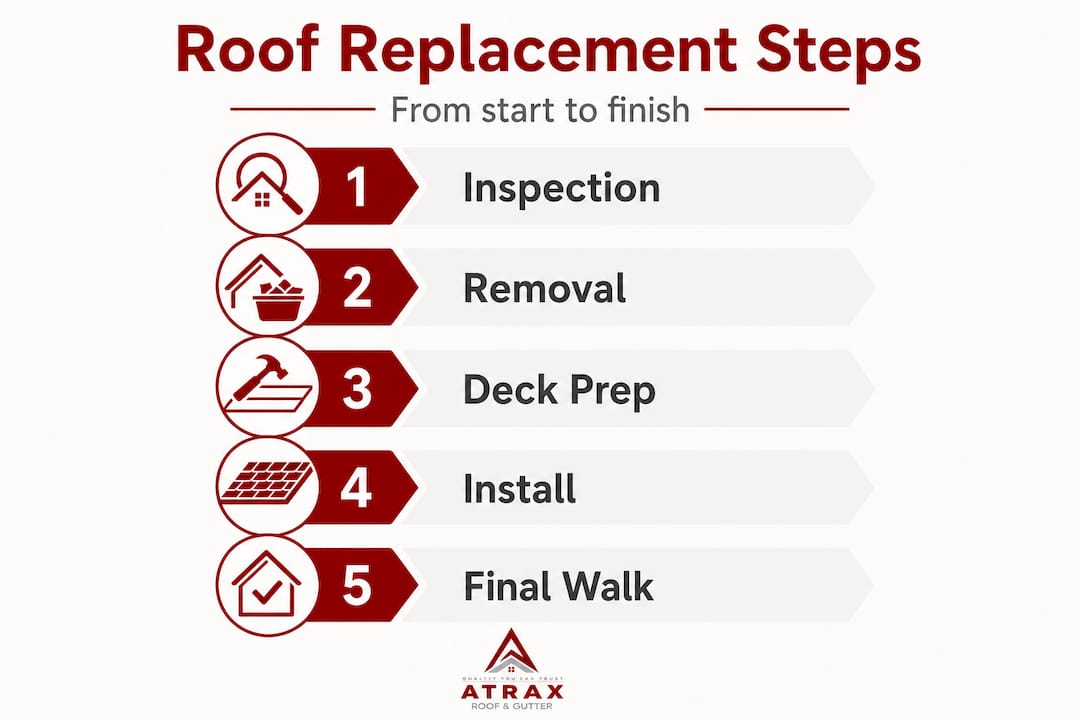
Here is how a professional roof replacement unfolds from beginning to end:
- Initial inspection and estimate. A qualified contractor evaluates your roof’s current condition, identifies damage, measures the square footage, and provides a detailed written estimate. This is your opportunity to ask questions and confirm what is and is not included.
- Permit application. Before any work begins, your contractor should file for all required permits. Always confirm this in writing. Skipping this step puts you at legal and financial risk.
- Material delivery. Shingles, underlayment, flashing, and other materials are delivered to your property, usually the day before or the morning of the job.
- Old roof removal. The existing roofing system is stripped down to the deck. This is the loudest and most disruptive part of the process. Expect noise and vibration throughout the home.
- Deck inspection and repairs. Once the old material is off, the decking is inspected for soft spots, rot, or structural concerns. Any damaged sections are replaced before new materials go on.
- New system installation. Underlayment goes down first, followed by ice and water shield in vulnerable areas, then new shingles or roofing material, and finally all flashing, ridge caps, and ventilation components.
- Cleanup and debris removal. A professional crew performs a full cleanup, including a magnetic nail sweep of the yard and driveway. Your property should look better when they leave than when they arrived.
- Final inspection. The permit inspection is scheduled, a city or county inspector reviews the work, and your project is officially closed out.
Widespread damage catching homeowners off guard is one reason working with trustworthy roofing contractors who communicate clearly at every stage matters so much. Good communication prevents surprises.
Pro Tip: Before the crew arrives, move potted plants and lawn furniture away from the house, cover any items stored in the garage near the walls, and let your neighbors know work is starting. Vibrations from tear-off can knock items off shelves inside the home, so check your attic for anything stored near the peak.
What most homeowners overlook: ask your contractor to walk you through the finished job before the crew leaves. Check the ridge, valleys, and flashing details yourself. It is much easier to address concerns before the crew demobilizes than to schedule a callback later.
A roofing expert’s perspective: Why smart planning beats quick fixes
Here is something we have seen play out dozens of times in our 10 years of working on roofs across Kirkland, Bellevue, Bothell, and surrounding communities. A homeowner calls us after spending $2,000 to $4,000 in patchwork repairs over three or four years, only to discover their roof still needs full replacement because the underlying decking has been slowly absorbing moisture the whole time. The repairs addressed symptoms but never solved the problem.
Washington’s climate is unforgiving to roofs that are not performing as a complete, sealed system. Persistent rain, moss growth, and the freeze-thaw cycles near the Cascades mean that a compromised roof does not stay “mostly fine.” It deteriorates faster than you would expect.
The contractors who cut corners on permits or skip code-required upgrades are not saving you money. They are transferring risk onto you. When your insurance company investigates a claim after storm damage, unpermitted work is one of the first things they look for. A denied claim on a major loss can far exceed whatever you saved on a cheap job.
Our perspective on our approach to roof replacements is straightforward. A well-planned, code-compliant replacement done with premium materials is not an expense. It is a long-term investment that protects your home’s structure, your family’s safety, and your property’s resale value. Homeowners who plan ahead, account for code requirements, and choose quality materials consistently report fewer surprises and lower maintenance costs over the following decade. That is not a coincidence. It is the result of doing the job right the first time.
Plan your roof replacement with trusted Washington experts
If this guide has helped you understand what roof replacement involves and what to watch for, the natural next step is connecting with a team that can evaluate your specific roof and give you a clear, honest plan forward.
At Atrax Roof & Gutter, we are licensed, bonded, and insured, and we serve homeowners across Kirkland, Bothell, Redmond, Bellevue, Seattle, and surrounding communities. We handle all permits, use only premium GAF and CertainTeed materials, and back every job with our 20-year workmanship warranty. We also offer roofing project financing options so cost does not have to stand between your family and a safe, reliable roof. Browse our Washington roof replacement portfolio to see real local projects and the quality of work we deliver. When you are ready, we are here to make your replacement smooth, compliant, and stress-free.
Frequently asked questions
Do I need a permit to replace my roof in Washington?
Most Washington jurisdictions require a permit for full roof replacements, so always verify with your local city or county before starting work. Local rules vary, but treating a full tear-off as permit-worthy is the standard approach in most areas of the state.
What code upgrades might be required during a roof replacement?
Pulling a permit can trigger requirements for new attic insulation, ice barriers, or drip edge installation per Washington’s energy codes. The specific upgrades required depend on your jurisdiction and the scope of work involved.
How do I know if I should repair or replace my roof?
If you are dealing with widespread leaks or damage across multiple areas, or your roof is near the end of its expected lifespan, replacement is almost always the better long-term investment.
Will my new roof last longer if I add extra insulation or ice barriers?
Yes. New insulation reduces heat loss that can cause ice dams, and ice barriers add a critical layer of protection at vulnerable edges and valleys. These energy-code upgrades extend your new roof’s effective lifespan while lowering heating costs.
What happens if I skip a required roof permit?
Skipping a required permit can result in fines, failed home sales, and denied insurance claims on future damage. Washington permit requirements exist to protect you, and unpermitted work may require costly removal and reinstallation to pass a future inspection.


