

Most homeowners in Washington State install gutter guards expecting to never think about their gutters again. That assumption leads to problems. Gutter guards are genuinely useful tools for protecting your home from water damage, but they work best when you choose the right type, install them correctly, and follow through with occasional maintenance. This guide breaks down everything you need to know, from how guards are defined and how different types compare, to what realistic performance looks like in the Pacific Northwest’s demanding climate.
Table of Contents
- What is a gutter guard and why does it matter?
- Types of gutter guards: Comparison and suitability for Washington’s climate
- Installation and maintenance: Getting the most from your gutter guard
- What to expect: Real-world performance and impact on home maintenance
- Our perspective: What most guides miss about gutter guards in Washington
- Find the best gutter guard solution for your Washington home
- Frequently asked questions
Key Takeaways
| Point | Details |
|---|---|
| Gutter guards limit overflow | They are designed to reduce water damage risk by keeping debris out of gutters, especially during Washington’s heavy rains. |
| Not maintenance-free | Even the best gutter guards require occasional inspection and cleaning to function optimally. |
| Match guard to debris type | Choosing a guard suited to your property’s tree and roof debris improves performance and reduces issues. |
| Proper installation is vital | A poorly installed guard can still fail and cause overflow, so professional fitting matters. |
| Periodic checkups boost value | Routine inspections and maintenance not only keep guards working but help protect your property’s value. |
What is a gutter guard and why does it matter?
A gutter guard is a device placed over or inside your gutters to block debris while letting rainwater flow through freely. The goal is straightforward: keep leaves, pine needles, twigs, and other material from piling up and causing clogs. When gutters clog, water overflows. That overflow can pool against your foundation, seep under your siding, damage your landscaping, and eventually cause costly structural problems.
Gutter guards are primarily intended to prevent overflow and the water damage that can result from clogged gutters, which require water to pool or back up.
For Washington homeowners, this matters more than most people realize. The Puget Sound region averages around 37 to 55 inches of rainfall per year depending on location, and areas like Bothell, Kirkland, and Redmond see extended rainy seasons that can stretch from October through April. During that stretch, your gutters are working constantly. A clogged gutter during a November downpour isn’t just inconvenient. It can direct hundreds of gallons of water directly toward your home’s foundation in a single storm.
Here is what well-chosen, properly installed gutter guards can do for you:
- Reduce how often you need to clean your gutters by keeping large debris out of the channel
- Lower the risk of overflow during heavy rainfall events that are common in Western Washington
- Protect your foundation and landscaping by directing water properly through downspouts
- Reduce the need for frequent gutter repair service caused by heavy debris loads, rust, and sagging
- Improve safety by reducing how often you need to climb a ladder for gutter cleaning
None of those benefits happen automatically. They depend on choosing the right guard for your specific situation and making sure it’s installed the right way.
Types of gutter guards: Comparison and suitability for Washington’s climate
There are four main types of gutter guards on the market, and each one performs differently depending on your roof type, surrounding trees, and the volume of rainfall your home receives.
Mesh guards use a fine metal or plastic screen stretched across the gutter opening. Water passes through the tiny holes while debris sits on top and eventually blows off or is brushed away. Mesh guards are generally considered the most effective for Washington homes because they handle both high water volume and varied debris types reasonably well.
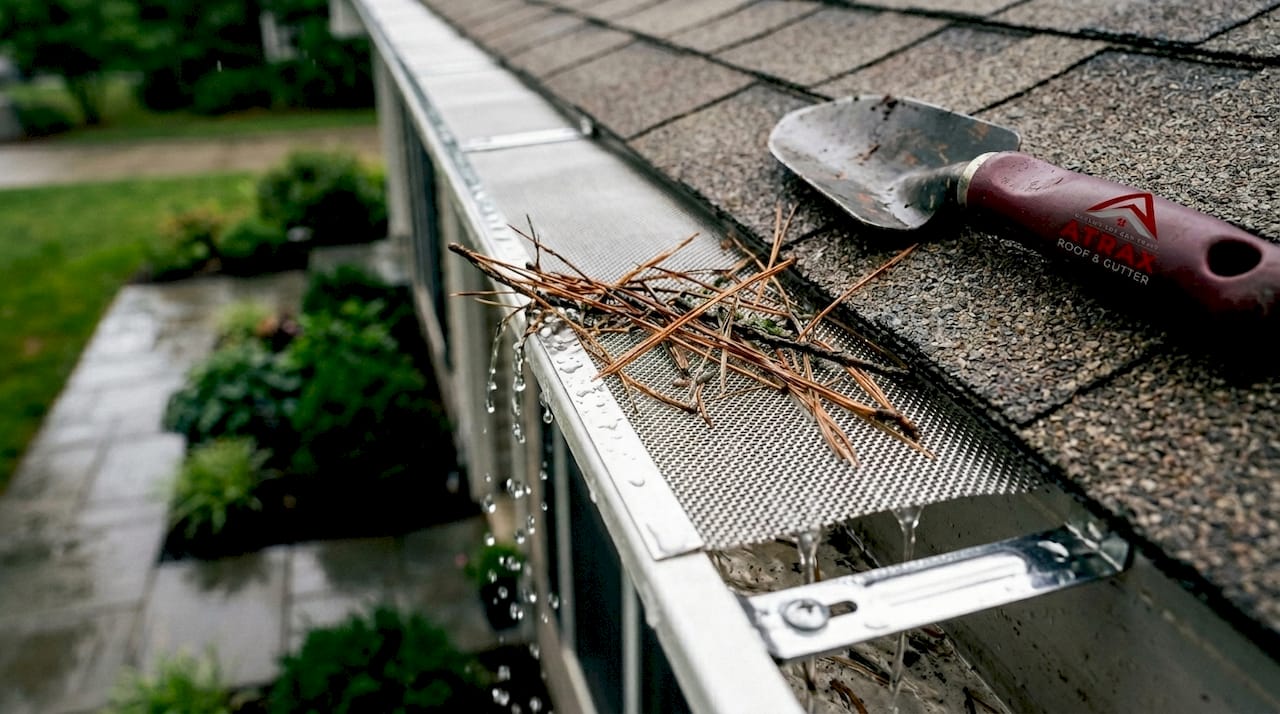
Screen guards work similarly to mesh but with larger openings. They block bigger debris like leaves and twigs but can struggle with pine needles, roof grit, and fine organic material. Many Pacific Northwest properties have Douglas fir, cedar, or pine trees nearby, which makes screen guards a weaker choice for those settings.
Foam inserts sit inside the gutter channel and allow water to seep through a porous foam material while debris collects on top. They are inexpensive and easy to install, but they tend to trap fine debris and moisture inside the foam itself, creating an ideal environment for mold, moss, and algae. In Washington’s wet climate, foam guards tend to degrade faster and require more frequent replacement.
Reverse-curve guards use surface tension to pull water over a curved lip and into the gutter while debris falls to the ground. They can be effective in moderate conditions but may struggle to handle the volume of rainfall common during Pacific Northwest storms.
| Guard type | Debris exclusion | Water capacity | Ease of cleaning | Suitability for Washington |
|---|---|---|---|---|
| Mesh | Excellent | High | Moderate | Best overall |
| Screen | Good | Moderate | Easy | Good for light debris areas |
| Foam | Poor long-term | Low | Difficult | Not recommended |
| Reverse-curve | Moderate | Moderate | Hard | Limited use cases |
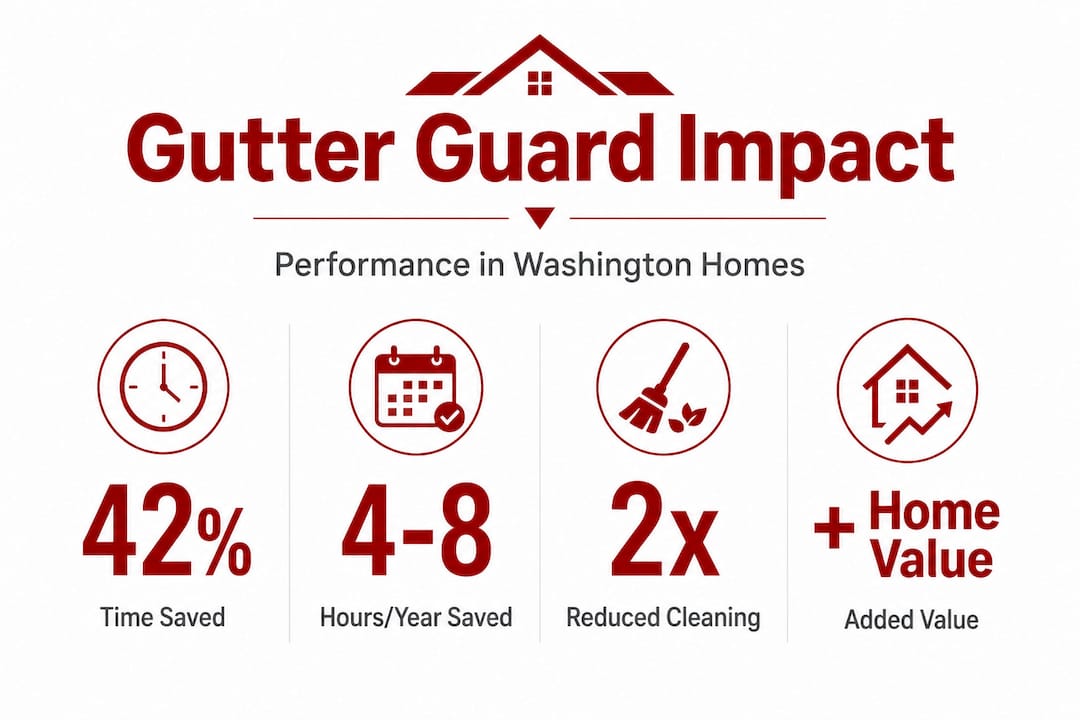
One important stat: 42% of surveyed homeowners reported saving 4 to 8 hours per year on gutter maintenance after installing guards. That’s real time back in your schedule, particularly if you’ve been climbing up to clear gutters every fall and spring.
That said, the performance data only holds up when you manage expectations correctly. As no gutter guard is truly maintenance-free, fine debris, organic buildup, and fit issues can still require periodic inspection or cleaning, regardless of how premium the product is. Washington homeowners dealing with fir needles, moss spores, and seed pods from big-leaf maples know this firsthand.
Differences in debris passage and installation affect real-world performance significantly, which is why reading generic national product reviews often leads homeowners astray. A guard that earns top marks in Arizona may underperform in Redmond.
Pro Tip: Before buying any gutter guard, walk your property and identify the specific debris types falling into your gutters. Pine needles need a finer mesh opening than maple leaves. Matching guard design to your actual debris is more important than brand reputation.
Staying on top of your gutter cleaning schedule and knowing when it’s time to explore gutter replacement options are both part of a smart long-term maintenance approach.
Installation and maintenance: Getting the most from your gutter guard
Buying the right guard is step one. Installing it correctly is what actually determines whether you get the protection you’re paying for. Poor installation is one of the most common reasons gutter guards fail, and in Washington’s climate, the consequences show up quickly.
Here are the key factors that determine whether your guard installation will hold up:
- Pitch and angle: Guards must be installed at the correct angle to allow debris to slide off rather than accumulate. A guard that is too flat becomes a debris collection platform.
- Secure attachment: Guards that shift or lift during wind or heavy rain create gaps where debris enters the gutter channel. Every section must be firmly attached to the gutter lip or fascia.
- Sealed gaps: Any gap between guard sections is an entry point for debris. This matters especially with mesh guards where even small misalignments can allow pine needles to funnel through.
- Compatibility with gutter size: A guard designed for a standard 5-inch K-style gutter will not perform correctly on a 6-inch gutter. Always confirm sizing before purchase or installation.
- Roof pitch considerations: Steep roof pitches can cause water to overshoot a guard entirely during heavy rain. This is a common issue in Washington and requires guards specifically rated for high water flow.
| Installation factor | What goes wrong without it | Impact level |
|---|---|---|
| Correct pitch | Debris accumulates on guard | High |
| Secure attachment | Wind lifts guard, gaps form | High |
| Sealed seams | Debris bypasses guard | Medium |
| Correct sizing | Water overflow at edges | High |
| Roof pitch matching | Water overshoots gutter | Very High |
In Washington State’s wet conditions, selecting a gutter guard type and ensuring proper installation matters because overflow can still splash water toward the foundation if capacity is exceeded. That is not a minor concern. Foundation water intrusion in Washington can lead to crawl space moisture problems, mold growth, and in serious cases, structural settling.
Maintenance after installation is also straightforward but must happen. Plan to inspect your gutter guards at least twice a year, once in late fall after the major leaf drop and once in early spring after winter storm debris has settled. During each check, look for:
- Debris accumulation on top of the guard
- Guard sections that have shifted, lifted, or pulled away from the gutter
- Sagging guard material caused by debris weight or ice buildup
- Moss or algae growth on the guard surface, which can block water flow
Pro Tip: After any significant storm, do a quick visual check from the ground. If you see water streaming over the front edge of your gutters during rain, that is a sign your guards may be overwhelmed, misaligned, or clogged. Catching it early prevents bigger repairs.
Use our gutter inspection checklist as a reference, and if you notice overflow happening regularly, our guide on preventing gutter overflow covers specific causes and solutions.
What to expect: Real-world performance and impact on home maintenance
Here is the honest picture. Gutter guards reduce the burden of gutter maintenance. They do not remove it entirely. Washington homeowners who install guards and then ignore their gutters for five years tend to end up with organic debris packed under the guard, moss growing inside the channel, and the same overflow problems they had before.
What guards genuinely do well:
- Reduce cleaning frequency from twice or three times per year down to once a year or less for many homes
- Make cleaning safer because there is less compacted debris and in some cases the guard surface is easier to clear than digging inside a clogged gutter
- Lower the risk of overflow during moderate rain by preventing debris blockages that build up over time
- Extend gutter lifespan by reducing standing water and organic matter that accelerate rust and corrosion
What guards cannot do:
- Block all fine debris, particularly pine needles, seed pods, and roof granules
- Prevent moss and algae growth inside the gutter channel entirely
- Replace proper downspout sizing and positioning
- Compensate for gutters that were undersized or poorly pitched before installation
If you want to reduce gutter maintenance in the Pacific Northwest, plan on at least occasional maintenance even with guards. Treat guards as clog reduction and safer maintenance tools, not total elimination of upkeep. That mindset will keep your gutters functioning well and help you catch problems before they become expensive.
Pro Tip: Keep a simple maintenance log. Note the date of each inspection, what you found, and what you did. After two to three years, you will have a clear pattern showing how your specific guards perform against your specific debris and rainfall. That data helps you plan cleaning more efficiently and catch any installation issues early.
For Washington homeowners thinking about the bigger picture, investing in proper gutter guards and maintenance does pay off. See how gutter upgrades for property value factor into your home’s overall appeal and long-term protection.
Our perspective: What most guides miss about gutter guards in Washington
Most product reviews rank gutter guards using nationwide testing criteria. They measure debris exclusion in controlled settings, evaluate ease of installation across generic gutter profiles, and rate water flow capacity under standard test conditions. What those reviews rarely account for is the very specific combination of factors Washington homeowners face: sustained rainfall over multiple months, a mix of coniferous and deciduous tree debris, roof moss concerns, and the cold, wet winters that stress both guards and gutters differently than dry climates.
In our experience working across Kirkland, Bothell, Bellevue, and Seattle, we see a consistent pattern. Homeowners who chose guards based on national ratings but did not account for their specific trees, roof pitch, or gutter size often end up with underperforming systems. The guard type matters far less than the fit between the guard, the installation quality, and the actual conditions at that property.
Here’s the perspective most guides skip: the best gutter guard for your home is the one installed correctly, matched to your debris environment, and supported by at least a basic inspection routine. A moderately rated mesh guard installed by a skilled professional, sized correctly for your gutter profile and roof pitch, will outperform a top-rated product that was cut to fit improperly or attached with the wrong hardware.
We also see homeowners who delay addressing gutter problems because they plan to “just add a guard.” Guards are not a fix for gutters that are already damaged, sagging, or improperly sloped. Address underlying issues first. Then install guards on a system that is already in good working order.
Following a reliable Washington gutter cleaning tips schedule alongside your guard investment is what actually delivers long-term protection. Guards and maintenance work together. Neither one replaces the other.
Find the best gutter guard solution for your Washington home
Choosing the right gutter guard, installing it correctly, and maintaining it over time is what keeps your home protected from water damage year after year. That is a lot to navigate on your own, especially with the variety of guard types, installation requirements, and debris conditions across Washington communities.

At Atrax Roof & Gutter, we help homeowners in Kirkland, Bothell, Redmond, Bellevue, Seattle, and surrounding areas find and install the right gutter solution for their specific home and climate conditions. Whether you need professional gutter repair, are ready to explore a full gutter replacement, or want to learn about gutter upgrades that add real long-term value, we bring 10 years of local experience, honest communication, and our 20-year workmanship warranty to every job. Get a free, no-surprise quote today and let us help you protect what matters most.
Frequently asked questions
Do gutter guards eliminate the need to clean gutters in Washington?
Gutter guards significantly reduce cleaning frequency, but occasional inspection and maintenance are still necessary due to fine debris and weather. As no gutter guard is truly maintenance-free, periodic checks remain essential for Washington homeowners.
What type of gutter guard works best for pine needles and heavy rainfall?
Mesh and screen gutter guards typically handle pine needles and rainfall well, but installation and matching guard to debris type are crucial for best results. Match guard design to the debris you actually have rather than relying on general product ratings.
How often should gutter guards be inspected or cleaned?
Most experts recommend checking gutter guards at least twice a year, especially after storms or autumn leaf drops. Differences in debris passage and installation affect how quickly buildup occurs, so homes with heavy tree cover may need more frequent checks.
Can improper installation cause gutter guard failure in Washington?
Yes, improper angle, insecure attachment, and poor fit can lead to overflow and water damage regardless of guard type. Installation matters because overflow can still direct water toward your foundation if capacity is exceeded.
Will installing gutter guards increase home value in the Pacific Northwest?
Installing quality gutter guards and maintaining them helps prevent water damage and can be viewed as a low-maintenance benefit by prospective buyers. Nearly 30% of homeowners reported never needing to clean their gutters at all after installation, which is a meaningful selling point in a high-rainfall region like Western Washington.


