

The signs a roof needs replacement are clear, physical indicators that the roof system can no longer protect your home from water, wind, or structural failure. Washington homeowners face a particular challenge: the Pacific Northwest’s relentless rain, moss-friendly humidity, and freeze-thaw cycles accelerate roof deterioration faster than in drier climates. Knowing the difference between a roof that needs a patch and one that needs a full replacement saves you from costly water damage, failed inspections, and emergency repairs. This guide covers every major warning sign, from visible shingle failure to hidden attic damage, so you can make a confident, informed decision.
1. Signs roof needs replacement: visible shingle damage
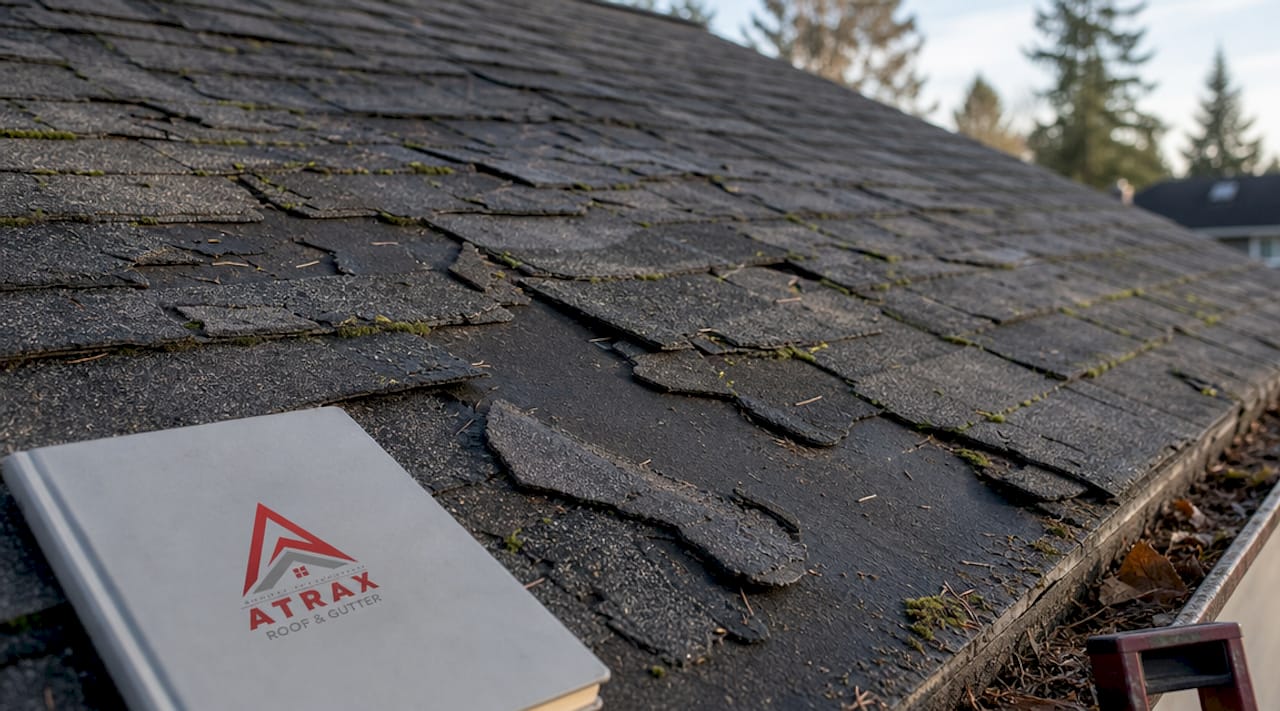
Curling, cracking, buckling, or missing shingles are the clearest roof replacement signs you will find without climbing a ladder. When shingles curl at the edges (called cupping) or curl upward at the center (called clawing), the material has lost its flexibility and can no longer shed water properly. Missing shingles leave the underlayment and decking exposed to direct rainfall, which is especially damaging during Washington’s wet season from October through April.
Roof damage indicators also include:
- Cracked or brittle shingles that break apart when touched or after minor hail
- Buckling shingles that form waves or ridges across the roof surface
- Exposed nail heads where shingles have shifted or blown off
- Dark streaking from algae growth, common in the Puget Sound region
Pro Tip: Stand at the corner of your property and look across the roofline at a low angle. Waves, dips, or uneven shingle lines are visible from the ground and signal widespread material failure, not isolated damage.
When damage covers more than 30% of the roof surface, repair becomes a temporary fix at best. At that threshold, a licensed contractor will typically recommend full replacement to avoid compounding labor costs over the next few years.
2. Granule loss and bald patches on shingles
Significant granule loss with large bare patches signals that replacement evaluation is necessary, not just a repair call. Granules are the protective mineral coating on asphalt shingles. They block UV radiation, add fire resistance, and help water run off cleanly. Once they wear away in large sections, the asphalt beneath bakes and cracks rapidly.
Check your gutters after a heavy rain. A thick layer of gray or brown granule sediment collecting in the gutter trough is one of the most reliable roof wear signs you can find without any tools. Occasional granule loss in new shingles is normal during the first few months. Widespread loss on a roof older than 10 years is a direct indicator of end-of-life material failure.
In Washington, moss and lichen accelerate granule loss by physically lifting the coating off the shingle surface. Roofs in shaded areas of Kirkland, Bothell, and Redmond are especially vulnerable to this pattern.
3. Attic and structural problems that signal replacement
Daylight visible through roof sheathing or spongy, sagging decking in the attic indicates long-term water intrusion and structural weakening that shifts the decision firmly toward full replacement. These are not cosmetic problems. They mean water has been entering the roof system long enough to rot the wood substrate beneath the shingles.
Structural roof damage indicators to check in your attic include:
- Visible light beams coming through the roof boards during daylight hours
- Soft or spongy spots when you press on the decking from inside the attic
- Water stains or dark streaking on rafters and sheathing boards
- Musty or moldy odors that persist even after dry weather
- Active mold colonies on insulation or wood framing
A sagging roofline or uneven roof shape viewed from outside is the exterior version of the same problem. When the decking has weakened enough to visibly bow, the structural integrity of the entire roof system is compromised. At that point, replacement is not optional.
Attic inspection with a flashlight is one of the most effective ways to discover hidden leaks and assess the roof’s true condition before calling a contractor. Spend 10 minutes in your attic on a sunny day with the lights off. Any pinpoints of light or damp insulation tell you more than a surface inspection ever could.
4. Roof age and Washington’s climate as replacement drivers
Roof age past the realistic service window is a primary factor that shifts care from repair to replacement. Architectural shingles typically last 20 to 28 years, while three-tab shingles often reach end of life between 15 and 20 years. Washington’s climate compresses those timelines.
Here is how age and climate interact to accelerate roof failure:
- Persistent moisture from Seattle’s 150-plus annual rain days keeps shingles saturated, promoting moss, algae, and wood rot beneath the surface.
- Freeze-thaw cycles in higher-elevation communities like Redmond and Bellevue cause shingles to expand and contract repeatedly, cracking the material faster than in mild climates.
- Wind-driven rain during Pacific storms forces water under shingles at angles that standard installation is not designed to handle indefinitely.
- Reduced UV exposure in overcast conditions slows some forms of UV degradation but allows biological growth like moss and lichen to thrive unchecked.
If your roof is over 20 years old and showing any of the physical signs described above, age alone justifies a professional evaluation. Insurance carriers and home buyers in Washington increasingly require documentation of roof condition and age during claims and transactions, so a current inspection report adds real value beyond the repair-or-replace decision.
5. How to inspect your roof safely and document damage
Knowing how to inspect a roof safely is the first step toward getting an accurate contractor estimate. You do not need to climb onto the roof. In fact, walking on a deteriorated roof can cause additional damage and is genuinely dangerous without proper equipment.
Gather these tools before you start:
- Binoculars for close-up views of shingles, flashing, and ridge caps from the ground
- A smartphone or camera to photograph every area of concern with timestamps
- A flashlight for the attic inspection
- A notepad or notes app to record exact locations, such as “north slope, third row from ridge, two missing shingles near chimney”
Detailed documentation with photos and precise notes improves contractor assessments and helps you get accurate repair versus replacement estimates. Contractors who receive documented inspection notes spend less time diagnosing and more time pricing accurately. That directly reduces the chance of surprise cost additions after work begins.
Pro Tip: Take your attic photos and ground-level photos on the same day and organize them by roof section. When you share them with a contractor, label each photo with the compass direction and approximate location. This saves 20 to 30 minutes on the initial site visit and signals to the contractor that you are an informed homeowner.
Check your roof inspection checklist twice a year: once in late spring after winter storms and once in early fall before the rainy season begins. Washington homeowners who follow this schedule catch problems at the repair stage rather than the replacement stage.
6. Repair vs. replacement: how to tell which one you need
Knowing how to tell if a roof should be replaced versus repaired comes down to the extent of damage, the age of the material, and the cost comparison over a five-year horizon.
| Condition | Repair is likely sufficient | Replacement is likely necessary |
|---|---|---|
| Damage extent | Isolated to one or two areas | Covers 30% or more of the roof |
| Shingle age | Under 10 years old | Over 20 years old |
| Decking condition | Solid, no soft spots | Spongy, rotted, or visibly sagging |
| Leak history | First occurrence, single source | Recurring leaks in multiple locations |
| Granule loss | Minor, localized | Widespread, gutters full of granules |
Roof repair services make sense when damage is genuinely isolated and the underlying structure is sound. The risk of delaying replacement when the evidence points to it is significant. Water that enters through a compromised roof travels along rafters and sheathing before it appears as a ceiling stain. By the time you see the stain, the damage path is often 10 to 15 feet long. Replacing rotted decking during a tear-off adds cost that a timely replacement would have avoided entirely.
Getting two or three quotes from licensed Washington contractors gives you a realistic picture of both options. A contractor who only offers replacement when repair is clearly sufficient, or only patches when replacement is warranted, is not giving you honest guidance.
Key takeaways
Roofs in Washington state require replacement when physical damage, structural failure, or age past 20 years combines with the region’s persistent moisture and freeze-thaw cycles to compromise the entire roof system.
| Point | Details |
|---|---|
| Visible shingle damage | Curling, cracking, or missing shingles covering 30% or more of the roof surface signal replacement. |
| Granule loss in gutters | Widespread granule loss means the shingle’s protective layer is gone and replacement evaluation is needed. |
| Attic structural signs | Daylight through decking, soft spots, or active mold indicate water intrusion beyond repair scope. |
| Age past service window | Architectural shingles past 20 to 28 years in Washington’s climate warrant a professional replacement assessment. |
| Document before calling | Photos and notes organized by roof section improve contractor accuracy and reduce surprise costs. |
What I’ve learned after 10 years of replacing roofs in Washington
After a decade of inspecting and replacing roofs across Kirkland, Bellevue, Seattle, and the surrounding communities, the single biggest misconception I see is that every ceiling stain is a roofing problem. Leaks on ceilings often stem from plumbing or ventilation issues rather than the roof itself, and misdiagnosing the source leads homeowners to spend money on roof work that does not fix the actual problem.
The second thing I have learned is that water is deceptive. It enters at one point and travels along rafters, insulation, and vapor barriers before it shows up as a stain. I have traced active leaks 12 feet from where the homeowner was certain the problem was. That is why I always recommend a full attic walkthrough before any replacement quote, not just a surface inspection.
My honest advice to any Washington homeowner: do not wait until you see a stain to act. By then, the damage is already weeks or months old. An annual inspection in the fall, before the rains arrive, gives you the information you need to make a calm, cost-effective decision rather than an emergency one. And when you do call a contractor, ask for documentation of everything they find. A trustworthy roofer shows you the evidence, not just the invoice.
— Danyllo
Protect your home with Atrax Roof & Gutter
If you have spotted any of the warning signs above, Atraxroofandgutter is ready to help you take the next step with confidence. We serve homeowners across Kirkland, Bothell, Redmond, Bellevue, Seattle, and surrounding communities with licensed, bonded, and insured roof inspections, repairs, and full replacements using premium GAF and CertainTeed materials.
Every project at Atraxroofandgutter starts with an honest, no-surprise assessment. Our team handles permit requirements for King County and Seattle, documents all findings in writing, and backs every job with a 20-year workmanship warranty. Whether you need a targeted roof repair evaluation or want to explore flexible financing options for a full replacement, we make the process straightforward and stress-free. View our completed projects to see the quality we deliver on every job.
FAQ
What are the most common signs a roof needs replacement?
Common signs include leaks, water stains, granule loss, curling or missing shingles, moss growth, and a sagging roofline. A professional inspection is required to confirm whether replacement or repair is the right course of action.
How old does a roof need to be before replacement is necessary?
Architectural shingles typically reach end of life between 20 and 28 years, though Washington’s wet climate can shorten that window. Any roof past 20 years showing physical damage warrants a replacement evaluation.
Do I need a permit to replace my roof in Washington?
Seattle roof replacements without structural changes are often exempt from permits, but damaged decking repair requires a permit and compliance with the IRC. In Kent and other King County cities, a building permit is required for most re-roofing projects.
Can I inspect my roof without climbing on it?
Yes. Binoculars from the ground and a flashlight inspection inside the attic reveal most critical roof damage indicators without requiring you to walk on the surface. Photographing what you find helps contractors give you accurate estimates.
How do I know if a ceiling stain is from the roof or something else?
Ceiling stains can result from plumbing leaks, condensation, or ventilation problems rather than roof failure. A licensed contractor traces the moisture path from the attic to confirm the source before recommending any roofing work.