

Replacing your roof isn’t as simple as scheduling a crew and waiting for them to finish. Many Washington homeowners are surprised to discover that the full process, from first inspection to final cleanup, can stretch over several weeks. Local permit requirements, seasonal rain, and contractor availability all play a role. If you’re planning a replacement for your Kirkland, Bellevue, Seattle, or Bothell home, understanding each stage of the process ahead of time will save you stress, protect your budget, and keep your family safe and dry.
Table of Contents
- Factors that influence roof replacement timelines in Washington
- Step-by-step roof replacement timeline: From planning to completion
- Typical roof replacement timeline breakdown: Comparison table
- Preparing for roof replacement: How to minimize delays and stay on track
- The truth about roof replacement timelines: What most guides miss
- Next steps: Find the right Washington roofing partner
- Frequently asked questions
Key Takeaways
| Point | Details |
|---|---|
| Permits add time | City permits are required for roof replacement and usually take about one week to approve in Washington. |
| Project complexity matters | Complex or structural roof jobs add extra time for permit reviews and installation. |
| Weather and scheduling impact | Rainy conditions and tight contractor calendars can further extend your timeline. |
| Step-by-step process clarity | Knowing each stage in advance helps you set realistic expectations and reduce delays. |
Factors that influence roof replacement timelines in Washington
Understanding roof replacement timelines starts with recognizing that no two projects are exactly the same. Several variables can push a project from a tidy two-week window to a month-long process.
Local permits and city-specific requirements are among the biggest factors. Every city in Washington handles permit applications a little differently. According to a city-by-city breakdown, permit approval times vary significantly, with Tacoma averaging around one week for straightforward roof replacement permits. More complex projects that involve structural changes, such as reinforcing the deck or changing the roof slope, can trigger additional reviews and push that timeline longer.
Here are the key variables that shape your project’s total duration:
- Permit approval time: Ranges from a few business days to several weeks depending on your city and project complexity.
- Seasonal weather: Washington’s rainy season, which runs roughly from October through May, can cause delays during installation. Rain creates safety hazards and prevents proper material adhesion.
- Contractor scheduling: Reputable crews book out weeks or months in advance, especially heading into summer when demand peaks.
- Project size and complexity: A standard single-story home with asphalt shingles moves faster than a multi-story home with steep pitches, multiple valleys, skylights, or a metal roof installation.
- Material availability: Supply chain issues can delay delivery of specific shingle colors, metal panels, or specialty underlayments.
Homeowner reality check: Many Washington homeowners assume the job starts the week after they sign a contract. In practice, the permit, material ordering, and scheduling phases alone can take two to four weeks before a single shingle is removed.
Pro Tip: Start your permit application as soon as you receive a signed contract from your roofing contractor. Many contractors handle this step for you, but confirming it is underway early prevents unnecessary waiting.
Step-by-step roof replacement timeline: From planning to completion
Now that you know what affects the timeline, let’s walk through what actually happens, step by step, from the moment you decide to replace your roof.
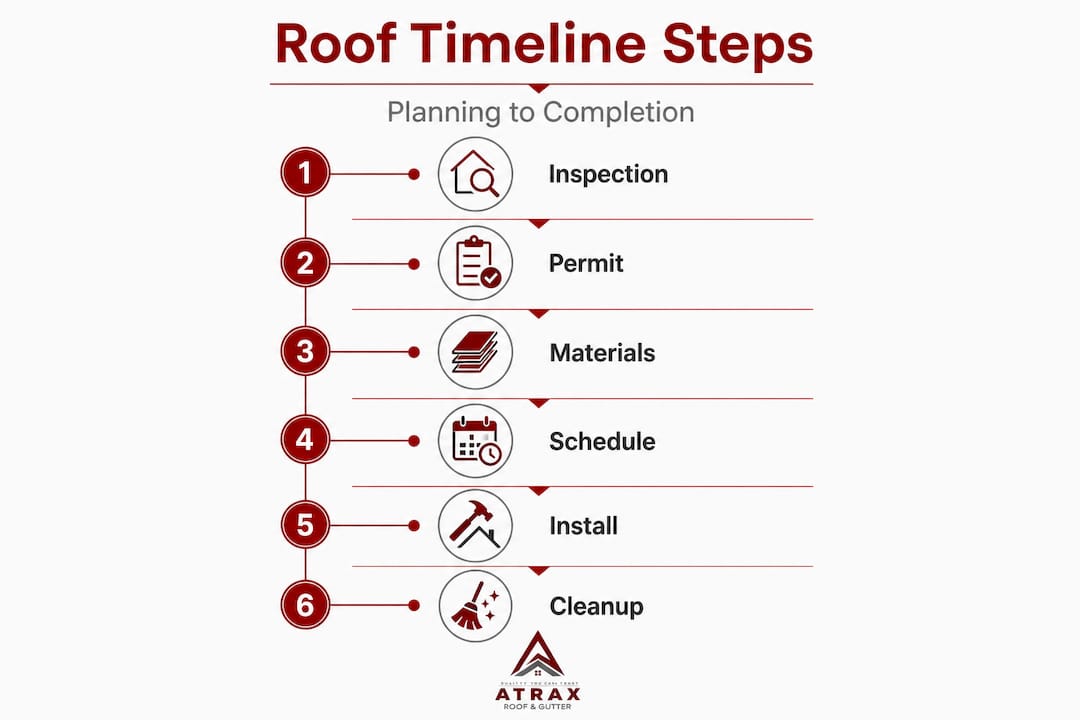
Step 1: Initial inspection and estimate (Days 1 to 5) A licensed roofing contractor inspects your existing roof to assess damage, measure square footage, identify potential structural concerns, and determine which materials are right for your home. You typically receive a written estimate within 24 to 72 hours of that inspection.
Step 2: Contract signing and permit application (Days 5 to 10) Once you agree on scope and pricing, your contractor files for the required permit with your city or county. In Tacoma, this permit process takes roughly one week for standard projects. In cities like Seattle or Bellevue, timelines can be similar for routine replacements but longer for complex structural work.
Step 3: Material ordering and delivery (Days 7 to 14) Materials are ordered as soon as the contract is signed, sometimes before the permit is even approved, to keep the schedule moving. Standard GAF or CertainTeed shingle orders typically arrive within five to ten business days. Specialty materials like premium designer shingles, copper flashing, or standing seam metal panels may take longer.
Step 4: Project scheduling (Days 10 to 21) Your crew is scheduled based on permit approval, material delivery, and weather forecasts. In peak season (May through September), top-rated contractors in the Puget Sound region often have wait times of two to four weeks. Booking early in the season, or even in the off-season, helps you avoid this bottleneck.
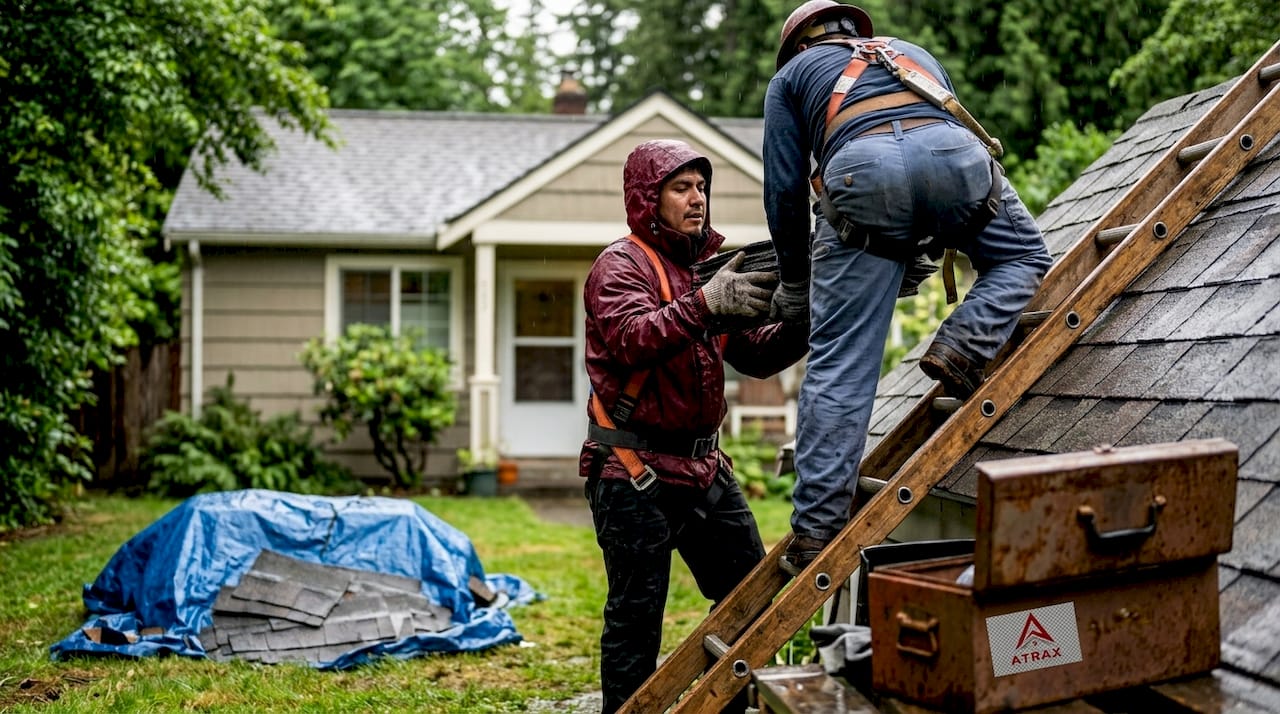
Step 5: Actual roof replacement (Days 1 to 3 on-site) Most standard residential roof replacements in Washington take one to three days on-site. A single-story home with straightforward access and asphalt shingles is often completed in one full day. Larger homes, steep pitches, or complex detailing around chimneys and skylights extend this to two or three days.
Step 6: Final inspection and cleanup (Days 1 to 2 after installation) After installation, a final walkthrough confirms the work meets local code requirements. Reputable contractors perform a thorough magnetic nail sweep of your yard, remove all debris, and haul away old materials. At Atrax, we recycle roughly 90% of removed materials, so your home and your neighborhood stay clean. Follow up with post-replacement maintenance tips to protect your new investment from the start.
| Stage | Typical duration |
|---|---|
| Initial inspection and estimate | 1 to 5 days |
| Permit application and approval | 5 to 14 days |
| Material ordering and delivery | 5 to 10 business days |
| Scheduling and wait time | 7 to 28 days |
| On-site installation | 1 to 3 days |
| Final inspection and cleanup | 1 to 2 days |
Key stat: When you add it all together, a well-coordinated standard roof replacement in Washington runs approximately 3 to 6 weeks from initial inspection to completion. Complex projects with structural reviews or specialty materials can run 6 to 10 weeks.
Typical roof replacement timeline breakdown: Comparison table
Let’s make it easy to compare how timelines shift based on your project type and specific needs.
The following table compares three common project types: a standard asphalt shingle replacement, a complex multi-story or structural project, and a metal roof installation.
| Phase | Standard asphalt (single story) | Complex project (multi-story or structural) | Metal roof installation |
|---|---|---|---|
| Inspection and estimate | 1 to 3 days | 3 to 5 days | 3 to 5 days |
| Permit approval | ~1 week | 2 to 4 weeks | 1 to 2 weeks |
| Material delivery | 5 to 7 days | 7 to 14 days | 10 to 21 days |
| Contractor scheduling | 7 to 21 days | 14 to 30 days | 14 to 30 days |
| On-site installation | 1 to 2 days | 3 to 5 days | 3 to 7 days |
| Inspection and cleanup | 1 day | 1 to 2 days | 1 to 2 days |
| Total estimated timeline | 3 to 5 weeks | 6 to 10 weeks | 6 to 10 weeks |
As noted in the permit guide, complex structural reviews can push permit approval well beyond the standard one-week window. This is a detail many homeowners only discover after they’ve already signed a contract and expected a faster start date.
Factors that make your project more complex include:
- Multiple stories or steep roof pitches (above 8:12 slope)
- Existing deck damage requiring partial or full deck replacement
- Adding or relocating skylights, ventilation systems, or solar attachments
- Significant changes to the roof structure or drainage layout
- Homes in historic districts that require additional review
For a closer look at what we’ve completed across the region, our local project portfolios show real projects with real results. If you’re unsure whether your project qualifies as complex, the best step is always a hands-on inspection. And if you’re dealing with localized damage rather than a full replacement, review your options through our roof repair timelines page to see whether repair is the faster and smarter choice first.
Preparing for roof replacement: How to minimize delays and stay on track
With a clear picture of the timeline in hand, here is how to set yourself up for a smooth, on-schedule replacement from day one.
Documents and information to gather before you start:
- Your current homeowner’s insurance policy and any claim documentation
- HOA approval if your neighborhood requires it for exterior changes
- A copy of your current roof’s permit history, if available from city records
- Your preferred start date window (giving yourself flexibility helps)
- A short list of questions about materials, warranties, and cleanup expectations
Tips for working effectively with your contractor:
- Confirm your contractor has pulled the permit before work begins. Never allow a crew to start without it.
- Ask for a written schedule that includes expected permit approval dates, delivery windows, and installation start dates.
- Get a single point of contact at the company so all your questions go to one person who knows your project.
- Confirm your contractor is licensed, bonded, and insured in Washington state before signing anything.
Coordinating permit approval with material delivery:
One smart move is to ask your contractor to order materials during the permit waiting period rather than after approval. This is standard practice for experienced crews and can shave a week off your total timeline. Most materials arrive within the same window as permit approval, which means your crew can start almost immediately once the green light comes through.
Pro Tip: Stay in regular contact with your contractor throughout the process, especially during the permit and scheduling phases. A quick check-in every few days catches any issues, like a rejected permit or a backordered material, before they turn into major delays.
According to the same Washington permit resource, timelines can shift based on the time of year and the current review workload at your city’s building department. Submitting permit applications earlier in the week and earlier in the season tends to result in faster turnaround.
For year-round roof maintenance planning, keeping a maintenance schedule in place after your replacement also protects the investment you just made and extends the life of your new roof.
The truth about roof replacement timelines: What most guides miss
Every guide on the internet will give you a clean, optimistic timeline. “One to three days!” they say. And technically, the physical installation often does take just one to three days. But that framing misses the full picture, and it sets homeowners up for frustration.
Here’s what we’ve learned after completing hundreds of roof replacements across Kirkland, Redmond, Bellevue, Seattle, and beyond. The best-case scenario almost never happens on the first try. Permits get delayed. A material shipment arrives short. A week of rain pushes the schedule back. These aren’t failures. They’re just reality.
The bigger issue is that many homeowners plan their lives around the best-case estimate instead of building in buffer time. They arrange vacations around what was supposed to be a one-week project. They delay addressing an active leak because they think work starts “next week.” That’s the real risk.
City-by-city permitting is genuinely unpredictable. What takes five business days in Tacoma might take ten in Seattle during a busy construction season. We’ve seen permit reviews in some jurisdictions stretch to three weeks for projects that looked straightforward on paper. Washington’s climate adds another layer. A few days of rain in March can push an installation that was supposed to start Monday to the following Thursday.
Our honest advice: plan for your total project to take six to eight weeks and treat anything faster as a welcome bonus. When you understand roof replacement expectations going in, you make better decisions about timing, insurance claims, and contractor selection. The goal isn’t speed. It’s a roof that protects your family for the next 20 to 30 years.
Next steps: Find the right Washington roofing partner
If you’re ready to move forward with a roof replacement, the best thing you can do is start the conversation early.
At Atrax Roof & Gutter, we handle every step of the process with honest communication and no-surprise pricing. From pulling your permit to the final cleanup, our licensed and insured team keeps you informed at every stage. Browse our project portfolio to see completed work across Washington communities, explore flexible roof financing options that fit your budget, and learn more about our full roof replacement services. We back every job with a 20-year workmanship warranty and a 100% satisfaction guarantee. Reach out today for a free, detailed estimate and let’s build a clear plan for your home.
Frequently asked questions
How long does roof replacement usually take in Washington?
Most standard roof replacements in Washington take one to three days for installation, but the full process including permit approval and material delivery typically adds two to four weeks. The total project timeline runs three to six weeks for most standard projects.
Does roof replacement require a permit in Washington?
Yes, city permits are required for roof replacement across Washington, and approval times vary by location. Tacoma’s average is about one week for standard projects, while more complex work may take longer.
What can delay a roof replacement project?
Delays most often come from permit waiting periods, weather conditions, and contractor scheduling. Complex structural reviews can extend the permit phase well beyond the standard timeline, so building in buffer time is always a smart move.
Can I speed up the roof replacement timeline?
Starting permit applications early, confirming material orders during the permit waiting period, and preparing all required documents in advance are the most effective ways to reduce delays. Working with a contractor who handles permit coordination as part of their standard process also helps keep things moving.


