

Emergency roof repair is the immediate, professional intervention required to stop active roof damage from threatening your home’s structure, safety, and market value. For Washington State homeowners, where heavy rainfall, windstorms, and falling trees are seasonal realities, a damaged roof is never a “wait and see” situation. The industry term for this service is emergency roofing mitigation, and it covers everything from temporary tarping and leak containment to full structural stabilization. This guide covers what qualifies as a true roofing emergency, what to expect from local contractors, how to protect yourself from scams, and how urgent roof repairs affect your real estate value and insurance coverage.
What qualifies as an emergency roof repair situation?
An emergency roof repair situation is defined by active risk: water entering the home, structural exposure, or safety hazards that worsen by the hour. Not every roof problem is an emergency, but misreading the severity is one of the most expensive mistakes a homeowner can make. Proactive repairs of minor issues consistently cost less than waiting for structural failure to force your hand.
The following conditions require immediate professional attention:
- Active interior leaks with water dripping through ceilings or walls
- Missing or displaced shingles that expose the roof deck to rain
- Fallen trees or large branches that have punctured or crushed roof sections
- Storm damage that has lifted flashing, gutters, or fascia boards
- Visible structural sagging in the roof deck or ridge line
- Exposed or damaged electrical wiring near the roofline
- Fire damage to any portion of the roof assembly
Problems that feel minor, like soft spots underfoot in the attic, loose flashing around a chimney, or a single cracked shingle, can escalate into full-blown emergencies within one or two Pacific Northwest rain seasons. Water finds the smallest path and widens it. A loose piece of flashing today becomes a soaked ceiling, rotted decking, and mold growth within weeks.
Safety is the first priority before any inspection. Never walk on a damaged roof after a storm. Assess from the ground or from inside the attic with a flashlight. If you see daylight through the roof deck or smell mold, call a licensed contractor before doing anything else.
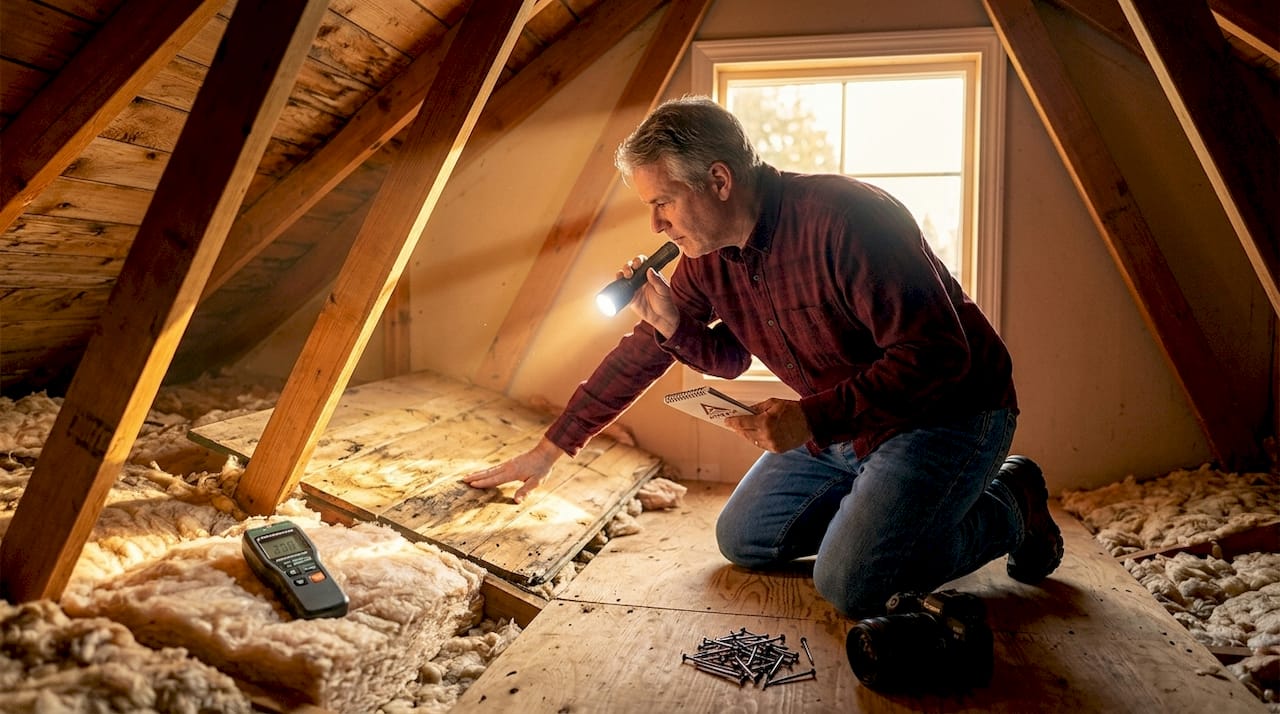
Pro Tip: Take photos and short videos of all visible damage immediately, before any cleanup or temporary repairs. Timestamped documentation is the single most powerful tool you have when filing an insurance claim.
How do emergency roof repair services work in Washington State?
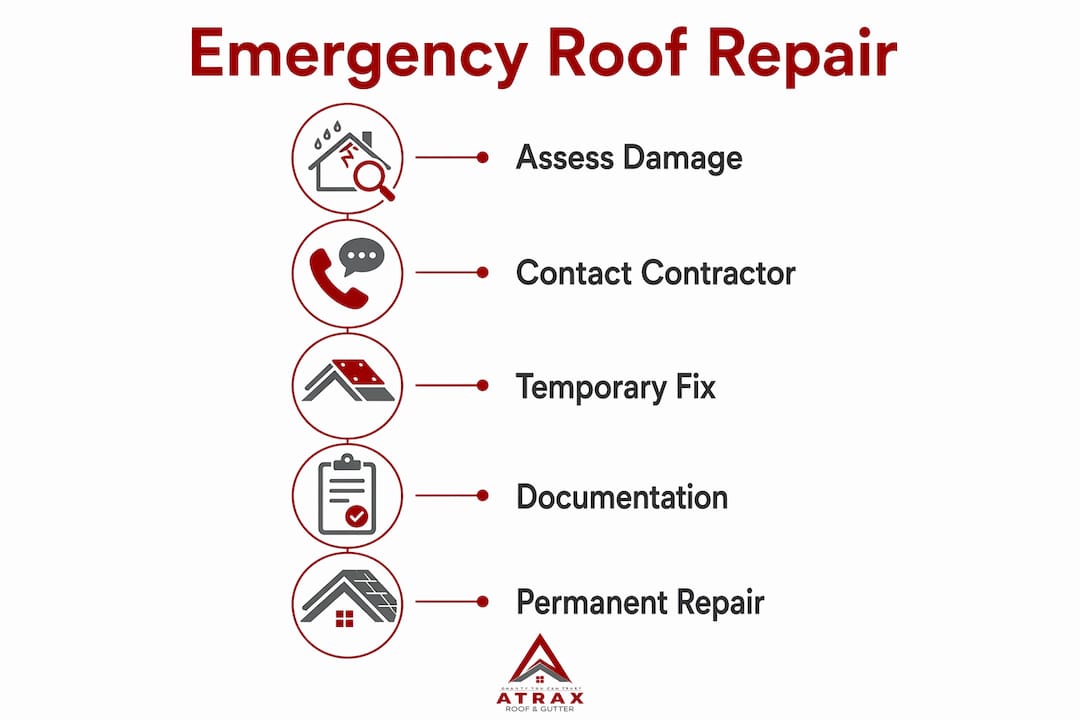
Emergency roofing services in Washington State follow a structured process designed to contain damage fast and create a clear record for insurance purposes. Emergency response times typically run 90 minutes to 8 hours for same-day calls during business hours, with after-hours response extending up to 24 hours. That window matters in a region where a storm can drop two inches of rain overnight.
Here is what a professional emergency visit typically includes:
- Initial damage assessment with photos and written notes documenting cause, location, and severity
- Temporary leak containment, usually heavy-duty tarping secured over the damaged area
- Structural stabilization if any decking, rafters, or supports are compromised
- Detailed written report covering all damage found, materials used, and recommended permanent repairs
- Insurance documentation package prepared for your adjuster
When you call for emergency service, specific damage details speed up dispatch significantly. Tell the contractor the cause of damage, where water is entering, whether there is structural compromise, and whether anyone in the home is in immediate danger. Vague calls get triaged lower than calls with clear, specific information.
Costs for emergency services vary by damage scope. Temporary tarping for a small breach typically runs a few hundred dollars. Partial shingle replacement or flashing repair after a windstorm can range into the low thousands. For detailed local pricing on common repairs, the 2026 repair cost breakdown for Eastside Washington is a useful reference before you call.
| Service Type | Typical Scope | Insurance Coverage Likelihood |
|---|---|---|
| Emergency tarping | Temporary leak containment | Often covered as mitigation |
| Shingle replacement | Partial or full section | Covered if storm-caused |
| Flashing repair | Around chimneys, vents, valleys | Covered if storm-caused |
| Structural stabilization | Decking, rafters, ridge | Covered with documentation |
| Full roof replacement | Total loss from storm or fire | Covered minus deductible |
Insurance frequently reimburses temporary tarping and emergency stabilization costs when the homeowner provides photo documentation. This is classified as “mitigation of loss” under most standard homeowner policies. Coverage for permanent repairs varies by policy, age of roof, and cause of damage, so contact your insurer the same day you call a contractor.
Pro Tip: Ask your contractor for a written report that includes cause of damage, materials used, labor performed, and recommended next steps. This document is your primary evidence for insurance reimbursement and future repair budgeting.
How to avoid scams and contractor fraud after storm damage
Door-to-door roofing scams spike immediately after major storm events, and Washington State is no exception. Fraudulent contractors follow storm paths, knock on doors in affected neighborhoods, and pressure homeowners into signing agreements before a legitimate inspection has taken place. Legitimate contractors never rush agreements or perform work without a thorough inspection and documented estimate.
Watch for these red flags:
- Unsolicited door-to-door visits within 24 to 48 hours of a storm
- Requests for large upfront cash payments before work begins
- No physical business address or local Washington State contractor license number
- Pressure to sign immediately with claims that the price expires today
- Vague verbal estimates with no written breakdown of materials and labor
- Offers to “work directly with your insurance” while asking you to sign over your claim
Verifying a contractor in Washington State takes less than five minutes. The Washington State Department of Labor and Industries maintains a public contractor lookup tool where you can confirm licensing, bonding, and insurance status by company name or license number. A licensed contractor will hand you their license number without hesitation.
The value of fixing roof vulnerabilities early cannot be overstated. Small issues addressed before storm season cost a fraction of what emergency repairs demand, and they eliminate the window of vulnerability that scammers exploit. A year-round maintenance schedule built for Pacific Northwest conditions is the most reliable way to stay ahead of emergencies.
Pro Tip: Get at least two written estimates before committing to any contractor. Call references from recent local jobs and check Google and BBB reviews. A contractor with a strong local reputation does not need to knock on your door after a storm.
How urgent roof repairs affect real estate value and insurance eligibility
Emergency roof repair has direct consequences for both your home’s resale value and your ability to maintain insurance coverage. A damaged or aging roof is the most common reason home inspections trigger renegotiation or deal collapse in Washington State real estate transactions. Buyers and their agents treat roof condition as a proxy for overall home maintenance, and a documented emergency repair handled professionally is far less damaging than deferred damage discovered during inspection.
Insurance carriers are tightening coverage restrictions for roofs aged 15 to 20 years, particularly when maintenance records are absent. Some carriers in Washington State now require a roof inspection before renewing policies on older homes. If deferred maintenance is found, coverage can be reduced, excluded, or canceled entirely. That is a significant financial exposure for any homeowner, and a catastrophic one for a seller.
| Roof Condition | Impact on Sale | Impact on Insurance |
|---|---|---|
| Well-maintained, under 15 years | Buyer confidence, full coverage | Standard premiums, full coverage |
| Minor damage, documented repair | Minimal negotiation, insurable | Premiums stable with documentation |
| Active damage, no repair record | Price reduction or deal collapse | Coverage risk, possible exclusion |
| Deferred maintenance, 15+ years | Major inspection flag | Renewal risk, reduced coverage |
Documented emergency repairs actually support your position in both real estate negotiations and insurance claims. A written contractor report showing that damage was identified, contained, and permanently repaired tells a buyer and an insurer that this home is actively managed. Washington State sellers have specific disclosure obligations around known roof defects, and the seller repair obligations guide outlines exactly what must be disclosed and when.
Leak containment completed in under two hours with detailed photo documentation gives you a paper trail that protects your home’s value and your insurance claim simultaneously. Waiting even a few days after a storm event to call a contractor weakens both positions.
Key takeaways
Emergency roof repair in Washington State requires immediate action, verified contractors, and thorough documentation to protect both your home’s safety and its real estate value.
| Point | Details |
|---|---|
| Act within hours, not days | Delayed repairs worsen structural damage and weaken insurance claims. |
| Document everything immediately | Timestamped photos and written contractor reports are required for insurance reimbursement. |
| Verify contractor credentials | Check Washington State L&I licensing before signing any agreement. |
| Proactive maintenance reduces emergencies | Addressing minor issues before storm season costs far less than emergency repairs. |
| Roof condition directly affects real estate | Documented repairs protect sale price and maintain insurance eligibility for homes 15 years and older. |
What I’ve learned after a decade of emergency roof calls in Washington
After more than 10 years responding to roof emergencies across Kirkland, Bothell, Redmond, Bellevue, and Seattle, the pattern I see most often is not the storm itself. It is the delay. Homeowners call us three or four days after a windstorm because they assumed the damage was minor, or because they were waiting to see if it would “dry out.” By the time we arrive, what started as a displaced shingle has become saturated insulation, stained drywall, and the early signs of mold.
The second pattern I see is the aftermath of a scam. A homeowner signed with a door-to-door contractor the day after a storm, paid a deposit, and never saw the crew again. Or worse, the crew showed up, did a surface-level patch, and the leak returned with the next rain. Recovering from bad work is always more expensive than doing it right the first time.
My honest advice: treat your roof the way you treat your car. You would not ignore a warning light for six months and hope it resolves itself. A soft spot in your attic floor, a granule-filled gutter, or a lifted piece of flashing is your roof’s warning light. Address it before the storm season forces your hand. The homeowners who call us for routine roof maintenance are almost never the ones calling us at 10 PM in a rainstorm.
The emotional weight of a roof emergency is real. It is your family’s safety and your largest financial asset at risk simultaneously. Preparedness, not panic, is what gets you through it well.
— Danyllo
Atrax Roof & Gutter: fast, trusted emergency roof repair in Washington
When a roof emergency hits, you need a licensed, local team that responds fast and documents everything correctly. Atraxroofandgutter serves Kirkland, Bothell, Redmond, Bellevue, Seattle, and surrounding communities with professional emergency repair services backed by a 20-year workmanship warranty and a 100% satisfaction guarantee.
Founder Danyllo Silva built Atrax Roof & Gutter on honest communication and flawless workmanship, using only premium GAF and CertainTeed materials. Every emergency visit includes a full written damage report, insurance documentation support, and no-surprise pricing. If repair costs are a concern, financing options are available to help you act immediately without financial stress. Contact Atraxroofandgutter today for a free emergency assessment and protect what matters most.
FAQ
What counts as an emergency roof repair situation?
An emergency roof repair is required when there is active water intrusion, structural damage, exposed roof decking, or safety hazards like downed electrical lines near the roofline. Any condition that worsens with the next rain or poses immediate risk to occupants qualifies as an emergency.
How fast can a contractor respond to urgent roof damage in Washington?
Same-day emergency response typically runs 90 minutes to 8 hours during business hours, with after-hours calls addressed within 24 hours. Providing specific damage details when you call speeds up dispatch.
Will my homeowner’s insurance cover emergency roof repairs?
Insurance covers temporary mitigation costs like tarping and emergency stabilization when you provide photo documentation. Coverage for permanent repairs depends on your policy, the cause of damage, and the age of your roof.
How does a damaged roof affect my home’s sale in Washington State?
A damaged or poorly maintained roof is the leading cause of inspection-triggered price renegotiations in Washington real estate transactions. Documented professional repairs protect your sale price and satisfy disclosure requirements for Washington State sellers.
Can delaying repairs affect my insurance coverage?
Deferred maintenance on roofs aged 15 to 20 years can lead insurers to reduce, restrict, or cancel coverage at renewal. Acting promptly after damage and keeping maintenance records is the most reliable way to stay fully covered.


